
ClickHouse
Top 100
Illustrative curve — no price history on file for this company.
Funding
Raised a $400M round on Jan 16, 2026, bringing the total raised amount to $1B.
Returns Calculator
A $10,000 investment at Series B round (2021) would today be worth:
$75,000
7.5×the original amount
Illustrative · based on reported post-money valuations
Top posts
Sam Lambert
@samlambert
Clickhouse has been our most unreliable vendor and we've had to status a number of times because of issues with their cloud. A bunch of our customers moved to Tinybird and we might have to do the same.
Arpit Bhayani
@arpit_bhayani
Recently, ClickHouse published an update to pg_clickhouse, and the optimizations they did had one common theme - pushdown. Here's what it is... Before I go into the optimization, just to set the context, pg_clickhouse is a Postgres extension that enables any PostgreSQL instance to query ClickHouse tables using standard SQL. So your app talks to Postgres, and Postgres talks to ClickHouse. Benefit - seamless access to PG and CH. Here's the optimization. So, when you run a query with a WHERE clause against a remote ClickHouse table, Postgres fetches all the rows first and then filters locally. So effectively, you are pulling millions of rows across the wire just to discard most of them. Pushdown is the optimization where the engine sends filters and transformations down (in this case, to remote ClickHouse) to execute, so only the relevant result set travels back over the wire instead of raw bulk data. Yes, ClickHouse is fast, and it can scan and filter massive datasets efficiently - but without pushdown, this was getting bypassed entirely. With pushdown, the filter travels to ClickHouse before any data moves. SELECT * FROM events WHERE props ->> 'cid' = '42' gets translated into props.cid = '42', sent directly to ClickHouse. Only the matching rows come back. Date and other functions behave the same way. Thus, the core idea is to stop moving data you do not need. Push the work to where the data lives, and stream back only what the query actually asked for. To be honest, this is the right mental model for any query engine sitting in front of a fast backend. In the past, I have seen similar optimizations in Spark SQL as well. ClickHouse is actually a pretty interesting database. I read their first blog, and it turned out to be this good. I guess I will dissect a bunch of their blogs and internals. It is going to be fun.
M. V. Cunha
@mvcinvesting
🚨 ClickHouse just announced that it has reached over 4,000 customers and $250M in ARR. The company added more than 1,000 customers in a single quarter since January and more than tripled ARR YoY. $NBIS owns a ~25% stake. https://t.co/9JMaJbYZO8
Kyle Galbraith
@kylegalbraith
Clickhouse cloud is also one of our most vulnerable pieces and i know a ton of other folks who have been burned by it. performance is all over the place. we often discover outages for them. woke up one day to our entire cluster not serving queries for no apparent reason. metrics suck (surprising). no insights. no clean schema migration. i could go on. i have been begging planetscale to build a clickhouse product. i would switch today if they told me they had even a basic version.
chronark
@chronark
During our worst incident with clickhouse (sev0, our whole cluster was essentially down), they ghosted us for multiple hours and then tried to gaslight us later. Admittedly the root cause was our fault, but their dashboard settings behaved very unpredictably and we were stuck waiting for support. ___ On the other side, you have tinybird, who are the nicest people and super proactive to help you. You can ask them any schema/query/performance question and they'll help you. I had an issue once, where I accidentally spammed my own endpoint and racked up a $2000 bill over night. They discovered that and reached out on a sunday morning, asking if everything was ok, helped me find the issue and then optimize my queries even more. They also comped the full $2000 unprompted. ___ We're actively looking into migrating to tinybird this year. 💚
Katyayani Shukla
@aibytekat
You spent $3,600 a year on Google Analytics 360. Then $2,400 on Mixpanel. $1,800 on Amplitude. $1,200 on Heap for product analytics. All tracking the same visitors, the same events, the same funnels in systems that send your user data to third-party servers you don't control. Then GDPR enforcement tightened and you realized Google Analytics got banned in France, Austria, and Italy for transferring EU data to US servers without proper safeguards. Your analytics stopped being compliant. You opened the Google Analytics 360 pricing page. Enterprise needs a sales call. Starts at $50,000 per year minimum for most mid-market companies. You opened Mixpanel. Growth is $20 per month baseline plus usage. Enterprise is custom pricing. You opened Amplitude. Plus is $49 per month. Growth and Enterprise need custom quotes. You are paying thousands per year to send your visitor data to servers in another country in 2026. Now meet Plausible Analytics. A free and open source web analytics platform that runs on infrastructure you control with privacy-first tracking, no cookies, and GDPR compliance built in. Lightweight script. Real-time dashboards. No personal data collection. Built in 2018 when the founders realized website owners were violating GDPR without knowing it. Google Analytics uses cookies and persistent identifiers that require consent banners. Privacy-focused teams needed analytics that tracked traffic without tracking individuals. They wanted clean insights without compromising visitor privacy. They built a cookieless analytics platform that measures traffic not people. Elixir and Phoenix on the backend, React on the frontend. ClickHouse for event storage. No cookies. No persistent identifiers. No personal data. IP addresses are never stored. All key metrics on one page. Public dashboard sharing. Goal tracking and conversion funnels. Google Search Console integration. Email and Slack reports. 28,052 stars. 1,745 forks. AGPL-3.0 license. Active development this month. Here is what Plausible gives you: → Privacy-first tracking with no cookies or personal data → GDPR, CCPA, and PECR compliant by default → Lightweight script under 1KB that loads instantly → Real-time dashboard with all metrics on one page → Goal tracking and conversion funnels → Custom events and pageview tracking → Google Search Console keyword integration → Email and Slack reports with spike notifications → Public dashboard sharing with simple links → Team collaboration with role-based access → Revenue tracking and ecommerce analytics → Self-hosted or managed cloud deployment Here is what Plausible costs: Zero for self-hosted. Forever. No visitor limits. No event caps. No data retention fees. Google Analytics 360 charges $50,000 minimum per year. Plausible doesn't. Mixpanel charges $20 per month plus usage fees. Plausible doesn't. Amplitude charges $49 per month minimum. Plausible doesn't. Heap charges per session with enterprise pricing. Plausible doesn't. Here's the wildest part: Plausible's tracking script is under 1KB. Google Analytics is 45KB. Your website loads 45x faster on analytics alone. No cookie consent banners because there are no cookies. EU privacy regulators approve it because no personal data crosses borders. Companies like Buffer and Basecamp switched because they wanted analytics that respected user privacy by default. For a company paying Google Analytics 360, you save $50,000 a year. For a startup on Mixpanel Growth, you save $2,400 a year. Your visitors. Your data. Your infrastructure. 100% Open Source. (Link in the comments)
Hiring Signal
Based on public job postings · updated monthly
Latest news

Public companies tied to ClickHouse

About ClickHouse
ClickHouse is the company commercializing the open-source ClickHouse database, a high-performance, column-oriented OLAP database management system built for real-time analytics at scale. Spun out of Yandex into ClickHouse, Inc. in 2021, it offers ClickHouse Cloud, a fully managed service used by companies such as Meta, Tesla, and Sony for observability, data warehousing, and AI/ML workloads. By mid-2026 it had crossed roughly $250M in annualized revenue run rate and served over 3,000 cloud customers.
ClickHouse on video
 49:14
49:14How ClickHouse powers Netflix, Uber & Spotify | Aaron Katz
The MAD Podcast with Matt Turck · Interview
 43:31
43:31Why Anthropic, Meta & Tesla All Chose the Same Database
Weights & Biases · Interview
 6:50
6:50What Is ClickHouse?
ClickHouse · Feature
 35:50
35:50Circle Sessions: Aaron Katz, Co-Founder + CEO at ClickHouse
Founders Circle Capital · Interview
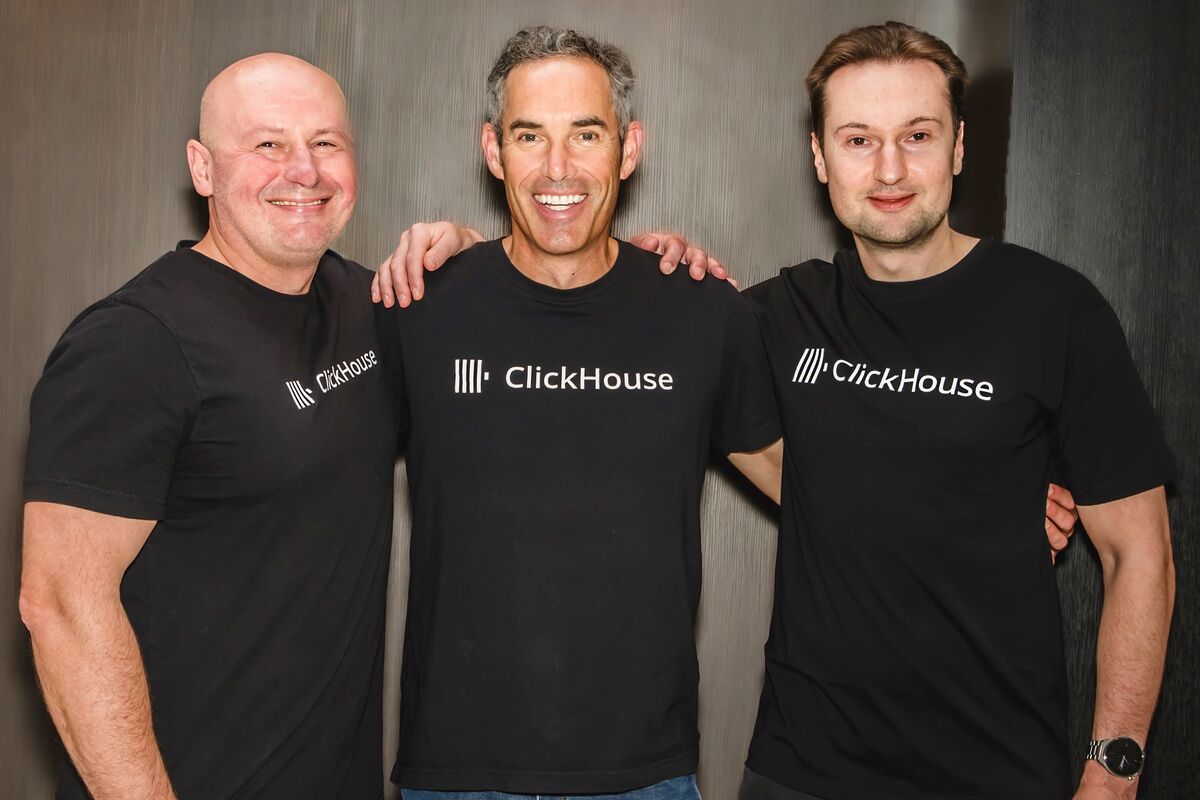
Founders

Aaron Katz
Co-founder & CEO
Former longtime Salesforce sales leader who co-founded ClickHouse, Inc. in 2021 and serves as CEO.

Alexey Milovidov
Co-founder & CTO
Original creator of ClickHouse, which he began building at Yandex in 2009 (committing the first lines of code); co-founder and CTO. GitHub: alexey-milovidov.

Yury Izrailevsky
Co-founder & President
Former VP of Engineering at Google and Netflix; co-founded ClickHouse, Inc. in 2021 and serves as President.
Key leaders

Kevin Egan
Chief Revenue Officer
Leads global go‑to‑market and revenue organization after senior sales leadership roles at Atlassian, Slack, Dropbox, and Salesforce.
Jimmy Sexton
Chief Financial Officer
Heads finance organization at ClickHouse, bringing prior CFO and senior finance leadership experience from Snowflake and ServiceNow.
Mariah Nagy
Vice President of People
Leads people and HR function after heading people teams at Weights & Biases, Confluent, and SurveyMonkey.

Tanya Bragin
VP Product & Marketing
Leads product and marketing for ClickHouse, responsible for product direction and go‑to‑market; frequent public spokesperson for the company.
Maged Shehata
Vice President, Global Solutions Architecture
Oversees global solutions architecture, bringing more than 20 years of solution engineering experience in data and AI, including leadership roles at Snowflake.
Andrew Straus
Vice President, Global Revenue Strategy and Operations
Leads global revenue strategy and operations after two decades of GTM and operations leadership at Snowflake, Kong, and HPE.
Recent hires

Jens Luebben
Regional Vice President
Previously at Cloudera · Greater Munich Metropolitan Area
Joined Jun 2026
Kenneth Melero
VP US Public Sector
Previously at Chainguard · Falls Church, Virginia, United States
Joined Jul 2026
Cristopher Stauffer
Vice President of Product Management
Previously at Aerospike · New York, New York, United States
Joined Jun 2026
Caitlyn Goode
Strategic Account Director - Banking & Financial Services
Previously at Snowflake · New York, New York, United States
Joined May 2026
Nikhil Kothari
Director, Technology Partnerships
Previously at Cloudflare · San Francisco, California, United States
Joined May 2026

Sergey Kuznetsov
Senior Database Reliability Engineer
Previously at EMCD · Miami-Fort Lauderdale Area
Joined Jun 2026