
Anduril Industries
Top 100
Funding
Raised a $5B round on May 13, 2026, bringing the total raised amount to $11B.
Returns Calculator
A $10,000 investment at Seed round (2017) would today be worth:
$6,931,818
693×the original amount
Illustrative · based on reported post-money valuations
Top posts
Jonah Lupton
@JonahLupton
This would make @anduriltech a 100-bagger in less than 8 years which means the valuation basically doubled every 12 months 🚀 /cc @PalmerLuckey
sourcery
@sourceryy
.@PalmerLuckey says @anduriltech's best-selling product has been Sentry Tower: "We’re covering about 35% of the US Southern border." "It's basically an autonomous tower that scans 360 degrees, detects all the people, vehicles, animals, drones, whatever, within a few miles." https://t.co/gOYfmYRVPX
Shanaka Anslem Perera ⚡
@shanaka86
JUST IN: The US Army just awarded $20 billion to a company whose drones crashed in Ukraine. That is not a scandal. It is the point. Anduril Industries received the largest enterprise contract in modern Army procurement history on 13 March for Lattice, its AI-powered command-and-control platform that fuses thousands of sensor feeds into a single real-time battlespace map, tasks autonomous drone swarms, and enables one operator to control what previously required dozens. The contract covers software, hardware, data infrastructure, compute, and services consolidated into a unified counter-drone capability. The Army did not buy a weapon. It bought an operating system for war. The operating system was written in Ukrainian rubble. Anduril deployed hundreds of Altius loitering munitions and Ghost reconnaissance drones to Ukrainian forces starting in 2024. The early results were catastrophic. Russian electronic warfare, the most sophisticated jamming environment on Earth, tore them apart. GPS spoofing sent Ghost drones spiralling into the ground. Persistent jamming reduced general drone hit rates to 10 to 15%. Altius units crashed before reaching targets. Ukrainian operators, who were simultaneously building their own drones at a rate of one million per year with 96% indigenous production, were unimpressed. Anduril did something most defence contractors do not. It sent engineers to the front line, collected operator feedback in real time, and redesigned the aircraft in months rather than years. The result was Ghost-X: a fundamentally different machine. Where the original Ghost relied on GPS, Ghost-X flies on vision. Onboard computer vision algorithms, optical flow sensors, and terrain mapping through electro-optical and infrared gimbals give the aircraft autonomous navigation in environments where every satellite signal is jammed. It does not need GPS because it can see. It does not need a datalink because Lattice gives it mission autonomy. It does not need a dedicated operator because one person can task an entire swarm. Ghost-X proved, in Anduril’s words, “markedly more resilient” in both Ukrainian combat and US Government electronic warfare testing. The drone that crashed in a jammed Ukrainian field became the drone that flies through jammed airspace without flinching. The $20 billion contract is the Army’s bet that what survived Russian EW can defeat Iranian Shaheds. The Iran war is the contract’s first test at scale. IRGC one-way attack drones are down 95% according to Hegseth’s briefing, but they are not gone. The Mosaic Doctrine’s 31 autonomous commands can still launch from dispersed positions using the simplest guidance systems available. The coastline that produces fast boats also produces cheap drones that do not need to be sophisticated to overwhelm. Lattice’s counter-UAS architecture, AI-fused radar and electro-optical data identifying threats in seconds, autonomous interceptors engaging without human delay, single operators managing swarm responses across the battlespace, is designed for exactly this: volume. The contract also reveals what the Army learned from Ukraine that it will not say publicly. Indigenous Ukrainian interceptors achieved 70% success rates against Russian drones in February 2026, built cheaply, iterated rapidly, and deployed at scale by operators who learned electronic warfare the hard way. The Army watched a country with a fraction of America’s budget outperform imported systems by iterating faster. The $20 billion is not just a purchase. It is an admission that the future of air defence is software-defined, AI-driven, and built by companies that treat combat data as a product cycle rather than a procurement milestone. Anduril’s drones crashed in Ukraine. Then they learned to see. Now the Army is betting $20 billion that seeing is enough to win a war where everything that depends on a satellite signal dies. Full deep dive analysis https://t.co/eMrt5qYYst
Marcus Weisgerber
@MarcusReports
NEW: @anduriltech just rolled out the first Fury drone built at its massive new factory outside of Columbus, Ohio https://t.co/MZByFnKhbI
Amb Vinay Mohan Kwatra
@AmbVMKwatra
Good conversation with @anduriltech CEO Brian Schimpf on defence, technology, co-production in India, supply chain partnerships and AI advancements. Also discussed India's growing defence industrial base that presents significant opportunities for manufacturing linkages with US firms such as Anduril.
⏳Towhee 🌏☮️
@amborin
US / Palantir run the US war against Russia, using "Ukraine" "Palantir rewards its best Ukrainian salesman Former Ukrainian Defense Minister Mikhail Fedorov has been offered a job at the American defense tech giant" "Palantir’s reported job offer to former Ukrainian Defense Minister Mikhail Fedorov demonstrates how Kiev’s defense establishment has become a recruiting pool for the Western military-industrial complex, where vibes, not results, are rewarded. Fedorov was fired by Vladimir Zelensky on July 16, ostensibly over a long-running conflict between him and the commander-in-chief of Ukraine’s armed forces, Aleksandr Syrsky. A self-styled ‘digital innovator’ and architect of Ukraine’s transition to a primarily drone-based war footing, Fedorov has since blamed his dismissal on Syrsky, an unpopular Soviet-trained general who was fired several days after Zelensky sacked Fedorov. Immediately after his dismissal, Fedorov claimed that he had already been offered a new job. “Even tech giants have called with job offers,” he said. “Alex Karp, the head of Palantir, suggested we do something together, but I told him, ‘let’s talk about it later’.” Fedorov’s reluctance to accept Karp’s offer may have something to do with his political ambitions – it's widely acknowledged that Zelensky sees Fedorov as a political rival who could relieve Brussels of its Kiev-corruption problem – but Karp’s offer was likely made for one reason: Mikhail Fedorov has been Palantir’s greatest salesman in Ukraine. Wiring Kiev for war: Palantir’s greatest salesman Fedorov first met with Karp in June of 2022, when he was still serving as Ukraine’s Minister of Digital Transformation. Palantir opened an office in Kiev shortly after the escalation of the Ukraine conflict and signed memoranda of cooperation with the country’s Defense, Digital Transformation, Economy, and Education ministries the following year. Appointed defense minister in January of 2026, Fedorov aggressively courted Palantir, pushing its AI-powered command-and-control software at the expense of homegrown alternatives. Fedorov marketed Ukraine as “the best training ground” for contractors like Palantir, and offered the company and its competitors – including Anduril Industries, ShieldAI, and AeroVironment – tax breaks, favorable regulations, and unprecedented access to battlefield data. By early 2026, Karp claimed that Palantir was “responsible for most of the targeting in Ukraine.” Fedorov hyped up the partnership, claiming in June that Karp “was just shocked by how we use Palantir. He was shocked by our vision, what we do and what we plan to do.” The face of the tech-war Fedorov oversaw Ukraine’s expansion of medium- and long-range strikes against Russian infrastructure, winning praise from Western media for “turning the tables” in the conflict – in the words of the Financial Times. Palantir’s software has been instrumental in “planning deep strike operations,” Fedorov said in May of 2026. While his vision of an AI-powered, high-tech military is hugely popular in Silicon Valley boardrooms and among Ukrainian officials tired of the Russian military’s inexorable, grinding advance in Donbass, it has been questioned by Ukrainian troops and commanders. Every new wave of strikes on Russian commercial warehouses seems to invite a retaliatory storm of missiles and drones on Kiev, and frontline troops told Ukrainska Pravda that the ‘deep strike’ campaign has had no measurable impact on the progress of the conflict. “I don’t know where we seized the initiative; there was simply a wave of PR activity in some areas,” an officer operating near Donetsk told the newspaper. Even mid-range strikes (<150km) on Russian command posts have had “no effect, not a drop” on the front, an officer near Konstantinovka added. Former Ukrainian Commander-in-Chief Valery Zaluzhny has warned that deep strikes are “expensive, technologically demanding, and ultimately reciprocal. Russia retains the ability to strike back with equal or greater force and neither side can rely on this form of warfare to produce a decisive strategic outcome.” Shortly before he was sacked from the same position, Syrsky published a lengthy article insisting that drones alone do not win wars. “You need artillery, mortars, engineering means, air defense, electronic warfare and dozens of other items,” he wrote. “You need to buy everything, not just what is currently in style.” The Kiev-Silicon Valley digital warfare pipeline At least two of Fedorov’s predecessors in the defense ministry – Aleksey Reznikov and Rustem Umerov – used their positions to enrich themselves through graft and embezzlement. Corruption carries consequences, however, and both Reznikov and Umerov have been investigated for wartime profiteering. Fedorov’s de-facto lobbying for Palantir is a safer and more legal path to riches, and one that has become more popular among Ukrainian defense and military officials. They include: All of these companies depend on contracts with the Ukrainian government – contracts that Shevchenko, Danilyuk, Honcharuk, and Matveichenko can leverage their connections to secure. For Western investors, this proximity to power amid an ongoing war represents a potential goldmine, particularly in the case of UFORCE and Trypilian. The former counts former British Defense Secretary Ben Wallace among its board members, and the latter is part owned by former British MP and minister Brooks Newmark. With the EU pouring €6 billion into Ukraine’s domestic drone industry this year alone, Honcharuk, Matveichenko, Wallace, and Newmark stand to profit handsomely. Less important is the combat effectiveness of their products. Consider the case of Helsing: Ukraine began using Helsing’s HF-1 and HX-2 loitering munitions in early 2024, shortly after Shevchenko left office. Both were dismal failures. The HF-1 proved ineffective, and despite being made out of plywood, somehow ended up more expensive than Russia’s ‘Lancet’ munitions. Meanwhile, the HX-2 was rushed into production before some potentially lethal errors were ironed out. In addition to being easily jammable and riddled with AI bugs, one battlefield test found that just 25% of HX-2s launched successfully. In January of 2026, the Ukrainian military rejected new orders from Helsing. Nevertheless, Shevchenko is now in charge of selling both products back to his former employers at the defense ministry. Wired for War: Could Anduril scam the US into an Indo-Pacific apocalypse?Read more Palantir was the first digital defense contractor to emerge from Silicon Valley, and its products have been tried and tested by governments, militaries, and law enforcement agencies across the Western world. However, the defense tech sector is crammed with dozens of young companies, some of which raise billions of dollars before ever developing a functional product. Even heavy-hitter Anduril – valued at more than $60 billion and sitting on more than $20 billion in US military contracts – has produced only two combat-tested weapons systems. One of these, a loitering munition similar to Helsing’s HF-1, was rejected by the Ukrainian military in 2024, and Anduril now relies on flashy anime videos to promote its future projects. It’s somewhat inevitable that an industry built on hype would find an enthusiastic cadre of salesmen in Ukraine, perpetually waiting on the next wunderwaffe to turn the tide against Russia. Leopard tanks, HIMARS rocket artillery, and F-16 fighter jets were all portrayed as magic bullets that would deliver victory, and none did. Manpower, logistics, and industrial capacity are what ultimately decide the outcome of a modern conflict, but these are not sexy subjects. Drones and AI are in fashion, and it is for this reason that Fedorov – and not Zaluzhny or Syrsky – has been offered a Silicon Valley sinecure." -RT
Latest news

Public companies tied to Anduril Industries
About Anduril Industries
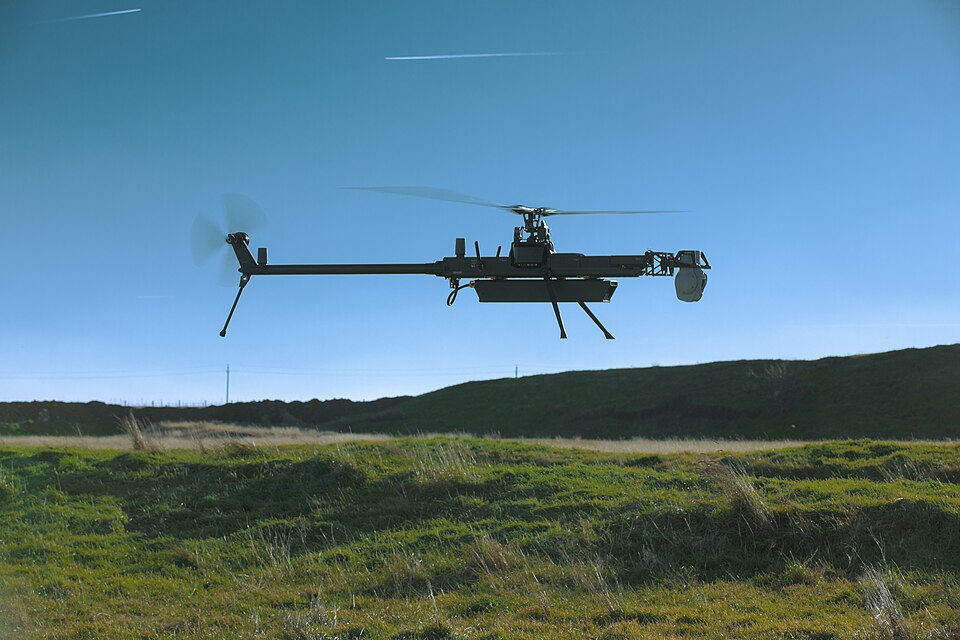
Anduril Industries is an American defense-technology company building autonomous systems and the Lattice AI platform for the US military and allies, founded in 2017 by Palmer Luckey and former Palantir leaders.
Anduril Industries on video
 15:16
15:16The AI Arsenal That Could Stop World War III | Palmer Luckey
TED · Talk
 1:03:41
Palmer Luckey on Anduril
All-In Podcast · Interview
 2:23:21
Palmer Luckey: AI Weapons, China & Global Conflict
Peter H. Diamandis · Interview
 8:11
8:11Lattice for Mission Autonomy
Anduril Industries · Feature
 2:06
2:06Anduril Lattice Counter Drone System
Anduril Industries · Feature
Founders
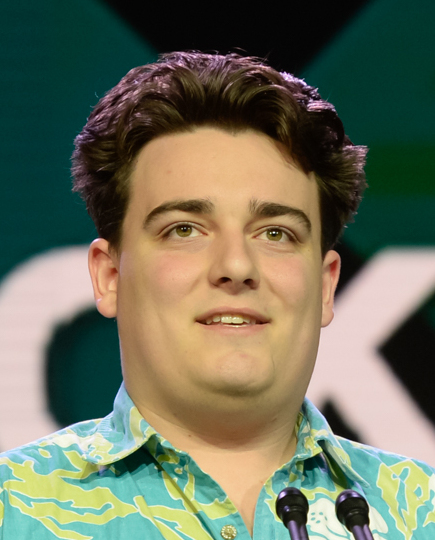
Palmer Luckey
Co-founder
Creator of the Oculus Rift VR headset; founder of Anduril.

Brian Schimpf
Co-founder & CEO
CEO of Anduril; former director of engineering at Palantir.

Trae Stephens
Co-founder & Executive Chairman
Partner at Founders Fund; executive chairman of Anduril.

Matt Grimm
Co-founder & COO
COO of Anduril; previously at Palantir.

Joe Chen
Co-founder & President
President of Anduril; previously at Palantir.
Key leaders

Christian Brose
President & Chief Strategy Officer
Former Palantir engineer; long-time national security strategist now leading Anduril’s strategy and global growth.
Matthew Steckman
President & Chief Business Officer
Former Chief Revenue Officer at Anduril; now leads global business operations, revenue, and divisional performance.
Matthew Kaplan
Chief Administrative Officer
Senior operations executive promoted to oversee revenue operations and corporate planning across Anduril.
Joseph Larson
Senior Vice President, National Security Operations
Long‑time national security and intelligence leader now heading Anduril’s National Security Operations organization.
Ann Marie Rosas
General Counsel
Legal leader overseeing Anduril’s global legal function and corporate governance.

Tom Keane
Senior Vice President, Engineering
Senior technology executive responsible for major strategic initiatives and partnerships.
Recent hires
Andrea Cruden
Managing Director, Space Business
Previously at L3Harris Technologies · Washington, DC (likely) / Remote
Joined Mar 2026
Anna Rubinstein
Director of AI & Autonomy Testing
Washington, DC area (likely)
Joined Apr 2026

J. Eric Langley
Senior Manager, Global Trade Operations
Previously at FTI Consulting · Irvine, California, United States
Joined Jun 2026

Matthew Meredith
Program Director - Mission Autonomy
Previously at Atom Computing · Seattle, Washington, United States
Joined Jun 2026

Christopher Hernandez
Senior Technical Program Manager
Previously at The Walt Disney Company · United States
Joined Jun 2026

Weaam A.
Sr. Technical Program Manager
Previously at General Motors · Los Angeles Metropolitan Area
Joined Jun 2026