
ByteDance
Top 100
Illustrative curve — no price history on file for this company.
Funding
Raised a new round on Feb 1, 2026, bringing the total raised amount to $9B.
Returns Calculator
A $10,000 investment at Series B round (2013) would today be worth:
$91,666,667
9,167×the original amount
Illustrative · based on reported post-money valuations
Top posts
amit
@amitisinvesting
A TON OF THINGS HAPPENED IN THE STOCK MARKET TODAY. Here's a full recap: 1. UBS raised its price target on Micron $MU to $1,625 from $535 while maintaining a Buy rating, citing structural changes in the memory market driven by AI. The firm expects Micron’s EPS to stay above $100 through 2029 and sees the company generating more than $400B in free cash flow over that period. UBS also pointed to long-term agreements across the memory industry that could lock in pricing and create a smoother earnings profile. Micron has now passed $1 trillion in market cap, making it the 9th largest company in the world. 2. As Elon Musk prepares to take SpaceX public, there is growing speculation that his longer-term goal could be combining SpaceX with $TSLA Tesla. According to CNBC, Musk has discussed the idea of folding the companies together with colleagues. Tesla and SpaceX already share engineers and collaborate on major technical challenges, including power and compute constraints. 3. The top 10 most active options today by contracts traded were $NVDA with 3.8M contracts, $TSLA with 3.6M contracts, $MU with 1.2M contracts, $AAPL with 932K contracts, $NOK with 801K contracts, $MSFT with 684K contracts, $AMZN with 635K contracts, $INTC with 627K contracts, $AMD with 548K contracts, and $F with 532K contracts. Nvidia and Tesla dominated the market, each trading more than 3.6M options contracts, while Micron was the next major standout with over 1.2M contracts traded. 4. $QCOM has reportedly struck an AI chip deal with ByteDance, with Bloomberg saying Qualcomm will supply AI-focused ASICs and ByteDance is expected to buy millions of chips for its AI agent software. The deal could make ByteDance one of Qualcomm’s first major AI ASIC customers as the company pushes beyond smartphone processors into AI infrastructure. ByteDance is also spending aggressively on AI, with SCMP reporting its 2026 AI capex was raised by at least 25% to about $29.4 billion. The agreement depends on the chips staying within U.S. legal compute thresholds for China. 5. Piper Sandler reiterated its Overweight rating on Microsoft $MSFT and maintained its $540 price target, citing material Copilot improvements, potential for more than 5 million FQ4 seat additions, AI capex converting into cloud revenue, and margin tailwinds from newer models. 6. The value of equities held by U.S. households has climbed to a record $57.7 trillion, up 156% since 2020. That is now $9.8 trillion, or 20%, above the total value of household real estate, marking the widest gap on record. Markets are pricing an 81% chance of a new U.S.-Iran agreement by June 30, likely leading to lower oil (now below $100) which could continue propelling markets to maintain their momentum. 7. $IREN signed a $1.6 billion purchase agreement with Dell for air-cooled NVIDIA Blackwell systems at its Childress, Texas data centers. The systems are expected to support IREN’s previously announced 5-year, $3.4 billion managed services AI cloud contract, with commissioning targeted for early 2027. IREN said the deal could increase its annualized run-rate revenue target from $3.7 billion to $4.4 billion, although that full target is not yet fully contracted. 8. Taiwan’s stock market has reached a record total market cap of $4.95 trillion, surpassing India’s $4.92 trillion for the first time and making Taiwan the world’s 5th largest stock market. The move has been driven by the AI-led rally in semiconductor stocks, with Taiwan’s market value more than doubling since mid-2024. Taiwan Semiconductor $TSM, which now represents roughly 42% of Taiwan’s total market value, has surged 130% over that period. Meanwhile, India’s market cap has fallen 12%, pressured by record foreign outflows, expensive valuations, and a weaker rupee. The contrast is notable because India is the world’s 6th largest economy, with GDP of $4.15 trillion, more than 4x Taiwan’s $977 billion economy. 9. Figure, the humanoid robotics company, has signed a commercial agreement with Catalyst Brands, the operator of JCPenney, Aéropostale, and Brooks Brothers, to deploy humanoid robots at scale. The partnership will begin with an initial deployment in Reno, Nevada, as Figure continues expanding real-world commercial use cases for its humanoid robotics platform. 10. Some insider buys: $NCLH CEO John Chidsey bought 153,000 shares at $16.37, worth about $2.5M, following Director Cohen’s ~$475K purchase last week. $HIMS Director David Wells bought 48,400 shares at $24.235, worth about $1.17M. Meanwhile, $NOK insider buying is accelerating, with Konstanty Owczarek buying roughly $1.1M of stock across two purchases in the last 30 days. An $INTU Intuit Director bought 1750 shares, the first insider buy since 2006. 11. AI is increasingly driving market profitability. The S&P 500’s net profit margin excluding financials has climbed to a record roughly 15%, while margins excluding the Magnificent 7 and tech have fallen to around 8%, near the lowest level since the 2020 pandemic. That creates a roughly 7 percentage point gap between tech and non-tech sectors, the widest on record. While margins outside of tech have been trending lower since 2022, Magnificent 7 and tech companies have seen margins accelerate sharply over the last several quarters. 12. SpaceX $SPCX has won a $2.29 billion contract from the U.S. Space Force to develop a space-based data network. WALL STREET IS THE GREATEST SHOW ON EARTH.
Deedy
@deedydas
China's Bytedance just dropped the most advanced video generation model in the world. Seedance 2.0 has: — native audio gen (lipsynced speech + music) — drastic step up from Veo 3.1 / Sora 2 in quality — supports multimodal input — 2k resolution Goes beyond cinematic video, and can do product demos as well. And it's really hard to tell it's AI.
Bo Wang
@BoWang87
ByteDance just published something I've been waiting for someone to build: CUDA Agent! It trained a model that writes fast CUDA kernels. Not just correct ones — actually optimized ones. It beats torch.compile by 2× on simple/medium kernels, ~92% on complex ones, and even outperforms Claude Opus 4.5 and Gemini 3 Pro by ~40% on the hardest setting. The key idea is simple but kind of brilliant: CUDA performance isn’t about correctness, it’s about hardware. Warps, memory bandwidth, bank conflicts — the stuff you only see in a profiler. So instead of rewarding “did it compile?”, they reward actual GPU speed. Real profiling numbers. RL trained directly on performance. That’s a big shift. Paper: https://t.co/EYx7QKosgk Project: https://t.co/pTCfzQIBes
Jukan
@jukan05
CHINA CONSIDERS RESTRICTING OVERSEAS ACCESS TO CUTTING-EDGE AI MODELS China’s Ministry of Commerce has led meetings over the past month with major AI companies, including Alibaba, ByteDance, and https://t.co/YDe0KRldDB, to discuss measures that would restrict overseas access to cutting-edge AI models, including models that have not yet been released. The discussions reportedly include not only closed-source models but also open-weight models. However, the scope of application is still under debate, and the rules may ultimately apply only to future frontier models. Officials have also discussed designating the leakage or theft of proprietary AI technologies as a national security crime, with stronger penalties, as well as restricting the types of foreign capital that can invest in Chinese AI startups. The backdrop is the U.S. move to strengthen export controls on AI models, along with national security concerns over cutting-edge models that could possess advanced cyberattack capabilities. Chinese authorities are reportedly concerned that advanced U.S. cybersecurity AI models could be used to exploit vulnerabilities in Chinese software. Since the beginning of this year, China has continued to tighten measures to prevent AI technology from being transferred overseas. Authorities have investigated whether Chinese AI startups that relocated abroad violated export control laws, while also strengthening oversight of overseas transactions involving Chinese investors, technology, data, and national security concerns. Future regulations could take the form of a tiered framework based on technological capability. Basic open-source AI models may be managed through a filing system, high-performance models may be subject to security reviews, and the most sensitive frontier models may be banned from public release or restricted to use within China.
Wall St Engine
@wallstengine
CHINESE MEMORY IS NO LONGER THE CHEAP ALTERNATIVE China’s largest DRAM maker, CXMT, is reportedly charging more than Samsung’s roughly $1,240 price for comparable 64GB DDR5 server memory modules. CXMT spent years competing as a cheaper, state-backed alternative. Now, AI data-center demand has tightened conventional memory supply, while Beijing has steered state-owned buyers toward domestic suppliers. Reuters reports CXMT has secured a five-year agreement worth more than $7 billion with ByteDance and another worth over $3 billion with Tencent. The company generated $7.5 billion in Q1 revenue, up 719% year over year, and is preparing to debut in Shanghai following an $8.6 billion IPO. New factories could more than double production capacity to over 600,000 wafers per month.
Charles Archer
@that_stocks_guy
Potentially #AGI🌟 Some thoughts on today's RNS. Google and Bytedance are the respective pinnacles of AI development across Amerca and China. There is a barrier to entry getting into these schemes, but more importantly, Potentially is sending a strong signal that the company is building access to the right model for the right task, regardless of origin. For years, the US and China have tried to wall each other off from AI. China's Great Firewall blocks Google outright. Beijing has long policed its own 'platform' stocks. And Washington has done the same in reverse. Congress passed a law in 2024 forcing ByteDance to divest TikTok's US operations or face a ban. The Supreme Court upheld that law in January 2025. It still took a full year of extensions, threats and negotiations before the deal actually closed; TikTok USA finally spun off in January 2026 into a joint venture led by Oracle, Silver Lake and MGX, with ByteDance kept to a minority stake. You'd think that kind of wall would slow AI down. It hasn't. It's just rerouted the money. Qualcomm signed a chip supply deal with ByteDance in May to power its AI data centers, structured carefully to stay inside export control limits, but still moving serious compute into Chinese AI infrastructure. On the other side, Google committed up to a million TPUs to Anthropic in a deal worth tens of billions. Two different empires, both racing to lock down infrastructure, neither one able to fully seal itself off from the other's ecosystem. And now Stripe is in talks to buy OpenRouter for $10 billion, a company that doesn't build a single model, but routes between hundreds of them. Potentially AI (AIM: AGI) just picked up Google Cloud credits through Google for Startups and discounted model access through ByteDance's BytePlus Partner Network. Potentially's consumer model is close to launch, and can reportedly do things OpenRouter can't: Consumer-first, not developer-first. It's built for ordinary users and small businesses, not the few people comfortable with an API key and config file. Ownership over access. Protects and lets you monetise what you create, rather than just generating content and handing the platform your data for free. Custom 'Stars'. Brands and IP owners can commission their own bespoke AI models trained on their own style, tone of voice or archive, licensable on their own terms. Two-sided Marketplace (the Universe). Creators can list and sell their own Stars back into the platform, with Potentially taking a commission at every transaction. Full modality coverage bundled together. Text, image, audio and video in one subscription, rather than fragmented routing. Composition, not invention. Nobody has combined consumer app + IP protection + marketplace into a single product. Yet. Governments can wall off platforms. Companies can't afford to. And nobody can wall off capital, or the incentive to route around friction. Tech is like water. It always finds a way.
Latest news
Public companies tied to ByteDance
About ByteDance
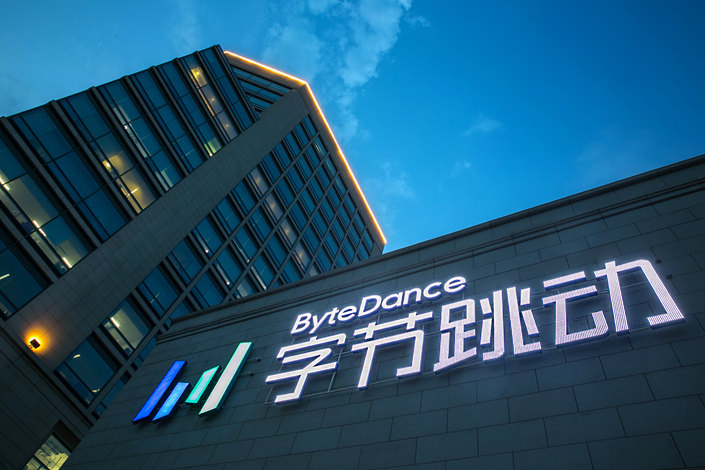
ByteDance is the Chinese technology company behind TikTok, Douyin, and the Toutiao news app, operating one of the world's largest portfolios of AI-driven content platforms.
ByteDance on video
 1:24
1:24TikTok in China versus the United States | 60 Minutes
60 Minutes · Feature
 26:49
26:49The Story of Zhang YiMing - Founder of TikTok and ByteDance
CHOSEN3 · Documentary
 7:04
7:04The Rise of TikTok: From Chinese App to Global Sensation | WSJ
The Wall Street Journal · Documentary
 0:30
0:30TikTok, Boom. | Official Trailer | Independent Lens | PBS
Independent Lens · Documentary
 4:39
4:39Meet Douyin, the Chinese Version of TikTok
NBC News · Feature
Founders

Zhang Yiming
Co-founder & former Chairman
Zhang Yiming co-founded ByteDance in 2012 and built it into the world’s most valuable private company through TikTok and Douyin.

Liang Rubo
Co-founder & CEO
Liang Rubo co-founded ByteDance and became its chief executive in 2021, overseeing the company’s global operations.
Key leaders
Julie Gao
Chief Financial Officer
Chief Financial Officer at ByteDance; named CFO in public company leadership listings.
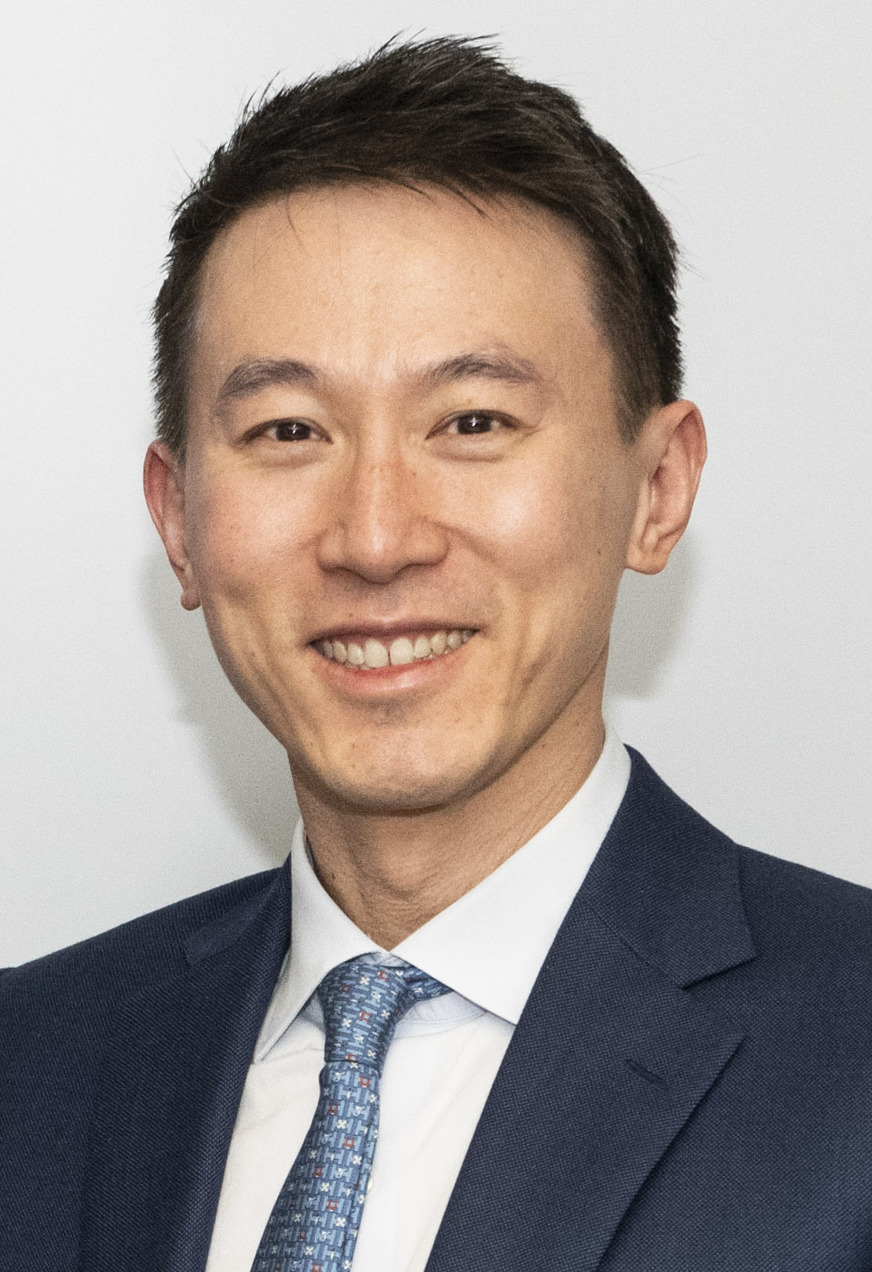
Shou Zi Chew
Chief Executive Officer, TikTok
CEO of TikTok, ByteDance’s global video platform; leads TikTok’s worldwide business and operations.
Chan Lin
Chief Commercial Officer
Chief Commercial Officer for Lark; appears in ByteDance leadership directories and company org charts.
Charles Li
Chief Information Officer
Chief Information Officer listed in ByteDance org charts; senior technology executive overseeing information systems.
John Rogovin
Global General Counsel
General Counsel for TikTok and senior legal leader across ByteDance-related operations in public org charts.
Rob Dodrill
Chief Risk Officer
Chief Risk Officer listed in ByteDance org charts; senior executive responsible for risk oversight.
Recent hires
Yu Bowen
Head of post-training for visual models and multimodal interaction, Seed team
Previously at Alibaba (Tongyi Lab · Hangzhou / Beijing, China
Joined Feb 2026
Lin Haibin
Senior expert, large-model training, Seed team
Previously at Safe Superintelligence Inc. · Beijing, China
Joined Jun 2026

Larry Haoliang Wang
Regional Human Resources Partner - APAC
Previously at Vocalbeats · Tokyo, Japan
Joined May 2026
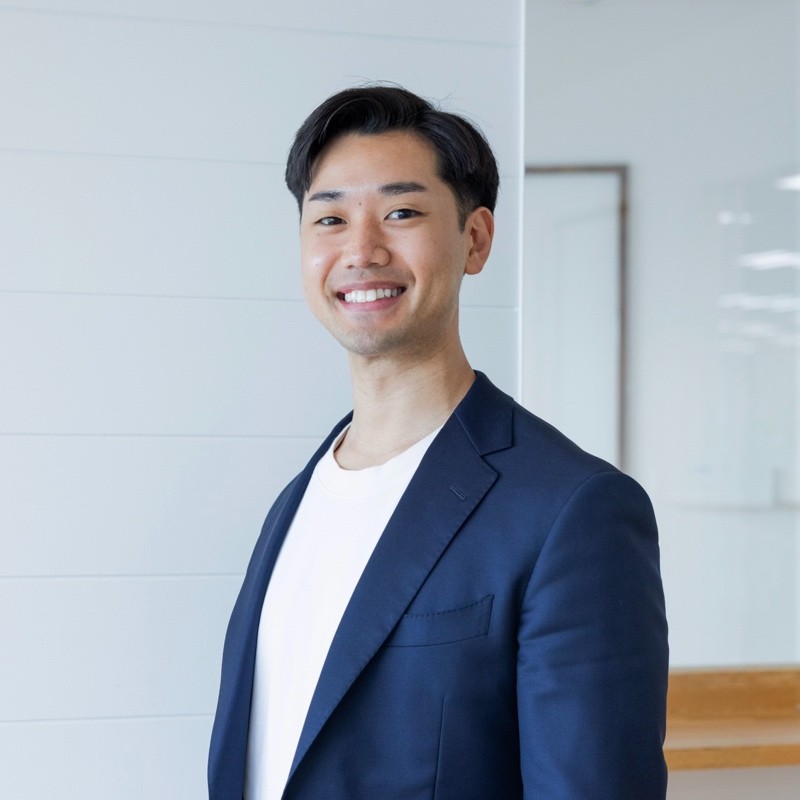
Kento Nakano
BytePlus | Sales Manager, GenAI (Global)
Previously at Sales Marker Co., Ltd. · Greater Tokyo Area
Joined May 2026
Yushen(Leo) P.
Innovative Technical Sales
Previously at Geoffrey AI · Boston, Massachusetts, United States
Joined May 2026

Karen Pan
Strategic Account Executive - AI Native
Previously at Microsoft · London, England, United Kingdom
Joined May 2026