Impossible Foods
Top 100
Funding
Raised a $500M round on Nov 17, 2021, bringing the total raised amount to $2B.
Returns Calculator
A $10,000 investment at Series A round (2011) would today be worth:
$622,956
62×the original amount
Illustrative · based on reported post-money valuations
Top posts
Sam Parr
@thesamparr
This is nuts - my buddy joel has had a company called Impossible. its decade plus old - impossible foods comes along - joel owns the impossible trademark - impossible foods sues him for trademark - he spends a TON of his own money defending the case. Like over 5-6 years. Counter sues. - We tell him he's nuts, just give him. - Today he just won Kudos, Joel!
Joel Runyon
@joelrunyon
The CEO of Impossible Foods - the fake meat company that has been suing me for 4.5 years - just left the company (only a couple weeks before trial starts). https://t.co/uXDG9NiVBu
Camus
@newstart_2024
Of course Bill Gates was involved. Published 2023 The Gates Foundation, GMO Ticks, and a Mysterious Meat Allergy – A Story of Billions, Bugs, and Beef. The number of Americans with Alpha-Gal Syndrome (AGS), a life-changing red meat allergy caused by tick bites, surged by 41.3% in 2021. Why is this significant? Let's connect the dots. 1/ The Tick & The Grant: In that same year, 2021, the Bill & Melinda Gates Foundation awarded a $1.47M grant to Oxitec Ltd. Their mission? To genetically engineer the Rhipicephalus microplus tick—a known vector for AGS—with a "self-limiting gene." 2/ The "Solution": Oxitec's plan was to release these GMO male ticks to mate with wild females, aiming to crash the population. In June 2023, after reporting "high efficacy," Gates poured another $4.8 million into the project. 3/ The Pharmaceutical Stake: Gates holds significant investments in Pfizer, a major producer of doxycycline—the primary antibiotic used to treat tick-borne illnesses like Lyme disease. His foundation also funded Ceres Nanosciences, a Lyme disease diagnostics company. 4/ The Food Industry Pivot: Simultaneously, Gates is a massive investor in the alternative meat industry. He backs Beyond Meat, Impossible Foods, Upside Foods, and Good Meat—companies positioned to replace the very red meat that AGS renders inedible. 5/ A Controversial Playbook? This isn't the first time this pattern appears. Look at malaria, eradicated in the US for decades until recently: 2007: Gates makes malaria a top priority, investing hundreds of millions. 2018: A Gates-backed drug, Krintafel, becomes the first new malaria treatment in 60 years. 2020: Gates funds Oxitec (again) to release GMO mosquitoes in Florida and Texas. 2023: A Gates-backed malaria vaccine is stocked. Weeks later, the CDC announces locally acquired malaria cases in... Florida and Texas. The CDC, which receives Gates funding, then recommends the very vaccine he backed. The Question: Are we witnessing a devastating (coincidence) or a deeply concerning pattern? A problem emerges, a solution is funded, and the funder holds stakes in both the cause and the cure—while also investing in industries that benefit from the societal shift the problem creates. There is no definitive evidence of causality yet. But the correlation and timing demand extreme scrutiny, total transparency, and absolute accountability. The public is not a testing ground. Our health is not a portfolio.
Rob Freund
@RobertFreundLaw
Joel fought back against Impossible Foods for more than 4 years and stuck to his guns all the way through trial. This week, a jury came back with $1.5M compensatory and $1.75M punitives for him and his business, a clean sweep on all claims. Congrats to Joel and his team. What a saga.
Sama Hoole
@SamaHoole
The loudest voice telling you to give up beef also owns the farms, funds the fake replacements, and holds the microphone. Bill Gates is the largest private owner of farmland in America. It is a sliver of the country's total, and that is the point. You do not need to own much land to decide what the rest of it grows. Then look at what he funds. Money into Impossible Foods. A stake in Beyond Meat. A startup growing "butter" from carbon dioxide in a vat, no cow required. He has tasted that butter and says he couldn't tell the difference. He will presumably still be eating the real thing. He also funds a vaccine for cattle, to shut down the microbes in the cow's stomach that make methane. The rumen, the finest digestive system on earth, the thing that turns grass into steak, and the plan is to inject it quiet. The cattlemen called the idea laughable. The funding rounds did not. And he said it into a live microphone. All rich countries, in his words, should move to one hundred percent synthetic beef. Then there is Africa, where his foundation sank close to a billion dollars into remaking farming across the continent. It promised to double the incomes of thirty million households. It missed. Hunger rose. It locked smallholders into patented seed and synthetic fertiliser, buried them in debt, and leaned on laws that criminalise saving your own seed. The farmers there have a blunter word for it. They call it the second colonisation. So here is the picture. He owns the farmland. He funds the replacement for what it grows. He funds the vaccine to reprogram the animal. He wrote the sermon that says it is all for the planet. And he ran the trial on Africa's poorest first. Maybe every piece of that is coincidence and goodwill. But when one man owns the field, patents the substitute, medicates the cow, writes the gospel, and quietly keeps the real butter for his own table, philanthropy starts to feel like a costume. He is building the future of food. He has just forgotten to leave you a seat at the table.
SAVE BEEF 🇺🇸 BeefMaps.com
@BeefMaps
🚨 Impossible Foods is down ~98%. Now Germany’s “Innocent Meat” raises €6M to scale AI-grown “cultivated pork” for 2028 — promising a ton a week from a bioreactor smaller than a parking spot. Same pitch: climate fix, fewer livestock, less land. Round 2. FIGHT! https://t.co/cuFl4WAD8V
Latest news
Public companies tied to Impossible Foods
About Impossible Foods
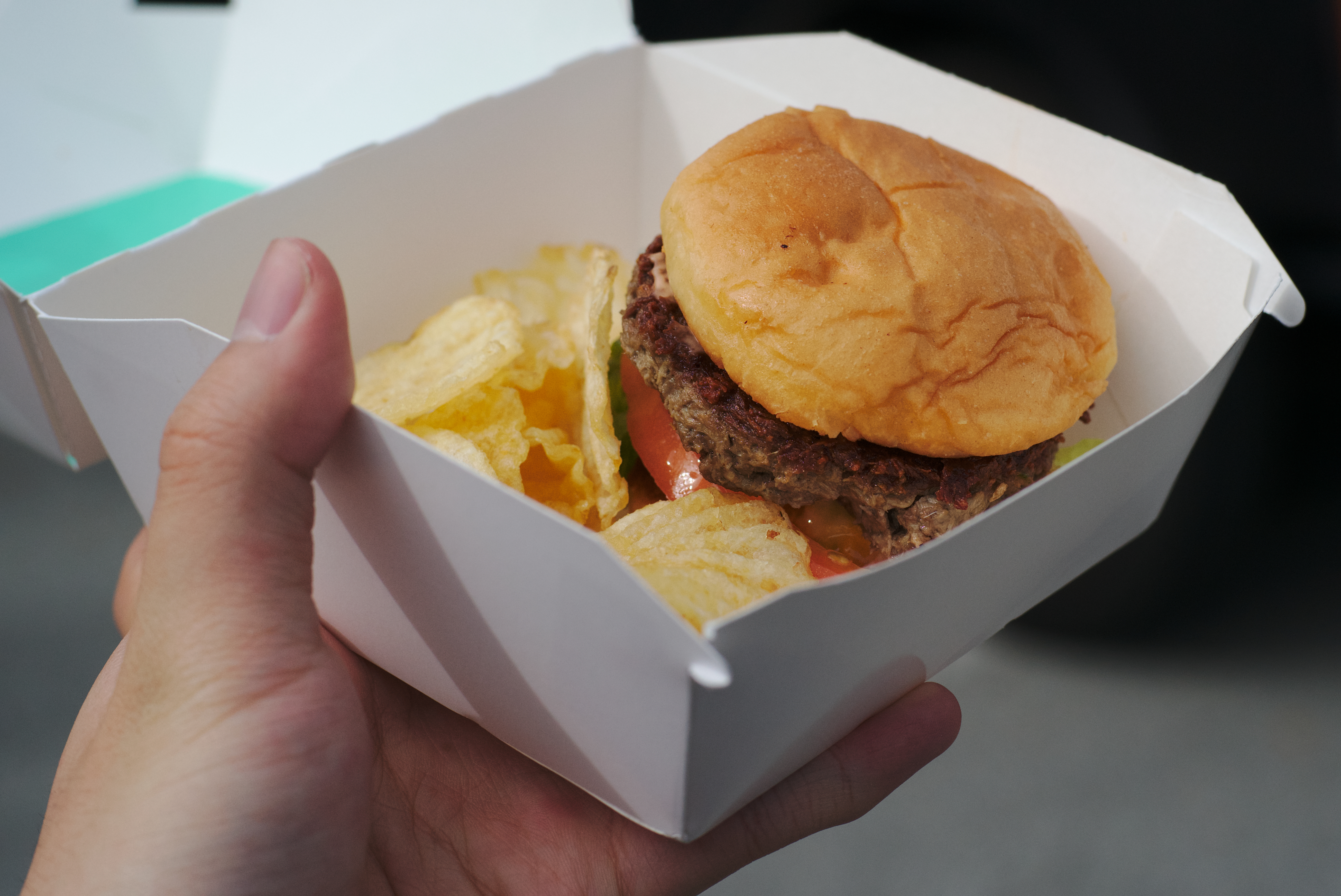
Impossible Foods develops plant-based substitutes for meat and dairy, best known for the heme-based Impossible Burger sold in grocery stores and restaurants including Burger King.
Impossible Foods on video
 39:13
39:13The Genius Behind The Plant-Based Impossible Burger | WILD HOPE
Nature on PBS · Documentary
 6:01
6:01The Strange Science of the Impossible Burger | WIRED
WIRED · Feature
 11:15
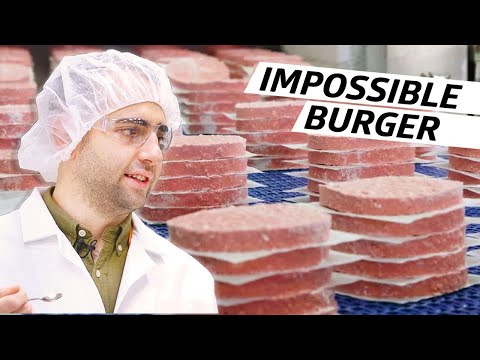
11:15How Impossible Foods Created the Perfect Meatless Burger
Eater · Feature
 13:54
13:54How Impossible Foods Turned a Burger Into a $4 Billion Brand
CNBC Make It · Feature
Founders
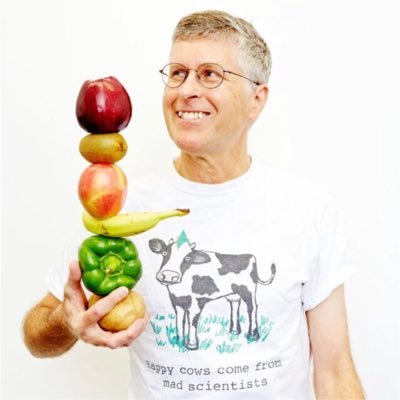
Patrick O. Brown
Founder & Former CEO
Stanford biochemistry professor who founded Impossible Foods in 2011 with the mission of replacing animal agriculture.
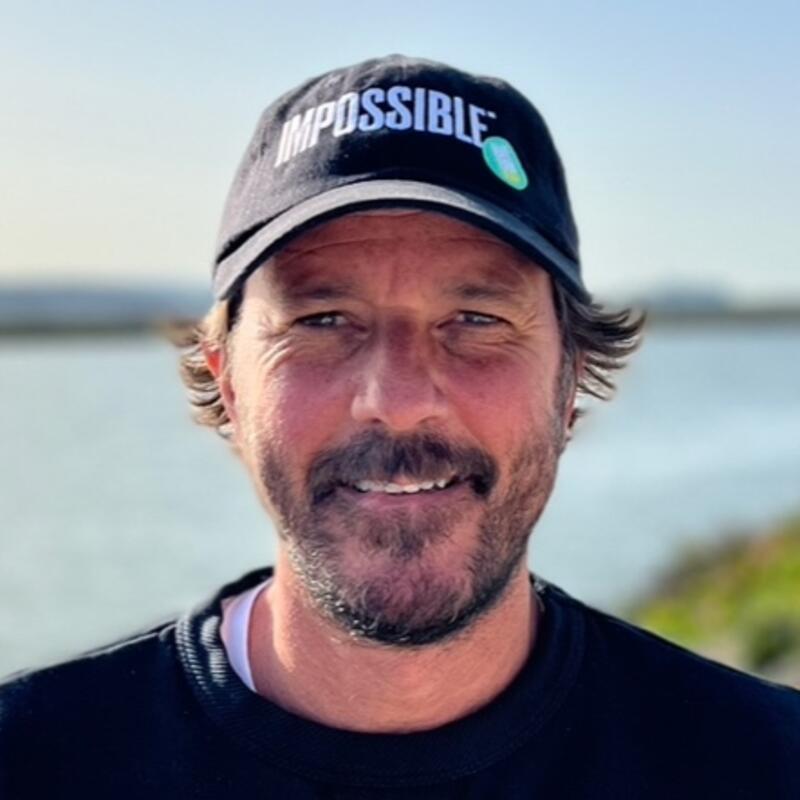
Peter McGuinness
CEO (2022-2026)
Former Chobani president who became CEO of Impossible Foods in 2022 and led its consumer rebrand.