Radiant
Top 100
Funding
Raised a $300M round on Dec 17, 2025, bringing the total raised amount to $525M.
Returns Calculator
A $10,000 investment at Series D round (2025) would today be worth:
$10,000
1×the original amount
Illustrative · based on reported post-money valuations
Top posts
Tim Draper
@TimDraper
Radiant Nuclear ( @RadiantNuclear ) just raised $300M+ and we were honored to lead the financing. Radiant's team is both visionary and able to execute--a powerful combination. @Bitcoin mining and AI combine with a future of flying cars and Mars launches to point to humans needing more and more energy. Nuclear energy is an appealing clean, productive solution. Radiant is building micro-reactors you can transport. Turn them on anywhere you need power like military bases, disaster zones, remote mining operations, critical infrastructure. Congratulations to Idaho for their forward thinking. Next year, their first reactor fires up at Idaho National Lab on Independence Day. After that, they're manufacturing at scale in Oak Ridge. Portable nuclear power is going to provide the bulk of our incremental energy in the years to come. Congratulations to @DougBernauer and the entire Radiant team on the funding. Now let's light up the world.
Molly O’Shea
@MollySOShea
In 2015, David Ulevitch (@davidu) sold OpenDNS to Cisco for $635M, now he co-leads the $600M AD fund at @a16z "It took me 10 years to basically have my overnight success" With a hard-earned operator background David shares his 3 key lessons 1.) Magnetic teams win. 2.) Capital flows to magnetic founders. 3.) Government & enterprise customers require deep, long-term (non-transactional !!) partnerships. & how its reflected in their portfolio among big names like Anduril, Base Power, Radiant, Castelion, & more BTW - While at Cisco, David was Senior VP & GM of Cisco Security, a $2.4 billion annual revenue business w/ more than 5K+ team members . . . "1.) I think the first thing is it starts with team & talent. The best companies in our portfolio have the best performing teams. And you know it's very easy in venture to fall in love with an idea, but what really matters is like is there a team there that can execute? Can that team magnetically the best talent in the world and get people to come work for them? People love working for Brian Schimpf (@SchimpfBrian) at Anduril (@anduriltech), they love working for Palmer Luckey (@PalmerLuckey), they love working for Matt Grimm (@mttgrmm). Like they they just they love that team and they're able to magnetically attract the absolute best talent. Chris Brose (@cdbrose) is probably the most in-demand person in the like the defense space today and he's worked at Anduril since the very beginning. You have to be able to magnetically attract the best talent and and every company we look at whether it's Base Power (@basepowerco) whether it's Saronic (@Saronic) it doesn't matter, Radiant Nuclear (@RadiantNuclear) they just become magnetic attractors of talent. 2.) The second thing is these companies are expensive & you know we've learned that they have to be able to magnetically attract capital.. And it sometimes it sounds dumb to say 'cause like we're investing in these companies so obviously they got capital but they need to be able to attract capital from other people as well. And we found that these companies are so capital-intensive & sometimes the curve to revenue takes a little bit longer 'cause you're doing manufacturing and doing all these other things. ..nothing matters more than the talent at the top the founders of the company. Can they magnetically attract capital? Can they magnetically attract talent? Those 2 things matter the most. And then I think what I've learned and I learned that in my own experiences, and you know it took me 10 years to basically have my overnight success ..and if I think about the years that were not that last night before we sold the company.. like the lessons I learned were like every time I had to change the way the company was operating.. it always started with talent. I had to change out the executive team, change out the leadership team that we had, at one point we were a consumer company, we pivoted to enterprise halfway through 5 years in and totally rebuilt the team. Because the kind of people that were building a consumer company were totally different than building an cybersecurity company. 3.) I think the last thing I learned that was really important, especially to help me set me up for the American Dynamism practice, is at Cisco, at that point I was running one of the largest cybersecurity companies in the world, and I recognized at Cisco that like when you sell to the government you need to have the people that know how to interface with the government, know how to sell the government. These are very very strategic sales processes. They're not transactional. Oftentimes the customer on the other side of the table is sometimes betting their career on picking your solution. The same thing is true now with government. When somebody who's a procurement officer, or a program officer, is betting on a defense startup to provide some solution they're really betting on their career in many cases to say like "I hope that Anduril or Saronic, or whoever, Castelion (@castelion) can deliver this solution for me." And so I think you need to recognize & appreciate, and this is what I learned at Cisco that these partnerships are just not transactional. They're deep relationships. You're gonna work with these people for years on these complex large you know $10 million plus deals & I learned that on the enterprise side at Cisco I see it now over & over in the AD portfolio. I think those are some of the biggest lessons that that I learned talent & then really partnership with your customers."
Brayton Williams ⏻
@BraytonKey
☢️@RadiantNuclear's factory license was accepted under 10 CFR Part 70. That’s the license to handle nuclear fuel. The difference between a warehouse and a real reactor factory. One of the biggest hurdles in going from demo to business 👇 https://t.co/mdUMVVWcyk
Atoms Not Bits
@AtomsNotBits
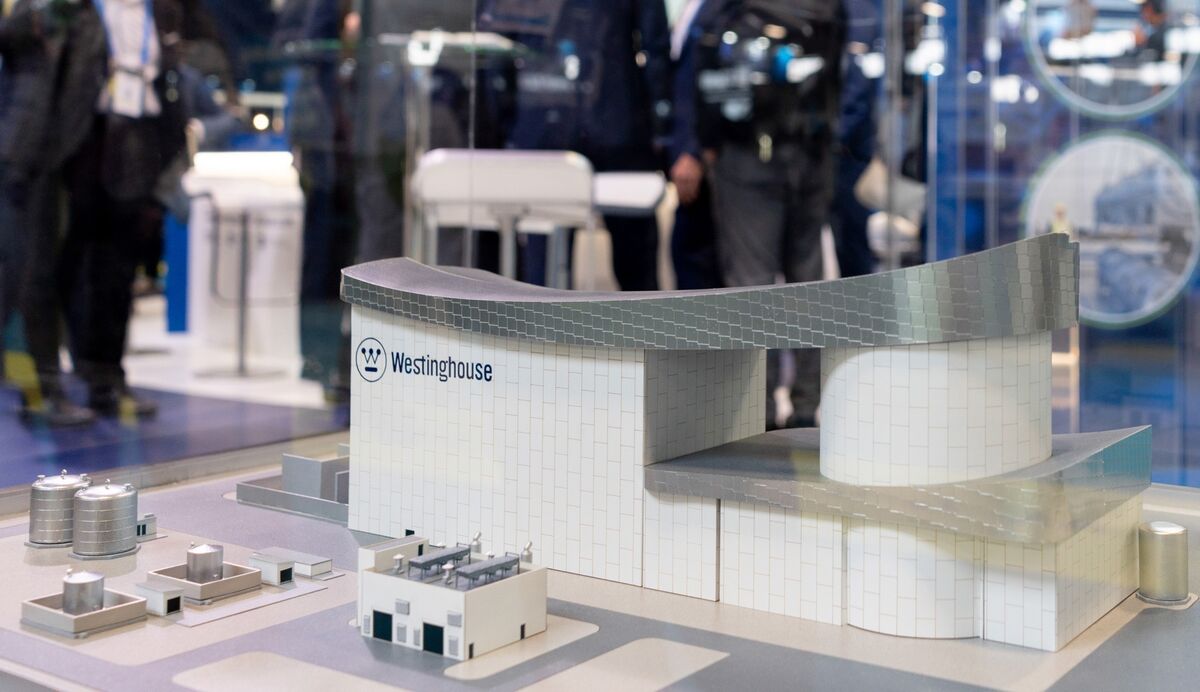
Breaking: Department of the Air Force and DIU have selected @AntaresNuclear, @RadiantNuclear, and Westinghouse Government Services to potentially build and operate nuclear microreactors on Air Force installation land. Radiant has been paired with Buckley SFB, Colorado; Westinghouse with Malmstrom AFB, Montana; and Antares with Joint Base San Antonio, Texas.
Owen Gregorian
@OwenGregorian
Shipping container-sized nuclear reactor enters build phase to power US military bases | Chris Young, Interesting Engineering The Pele microreactor is a 1.5-megawatt demonstration system that could ultimately power military bases and aid in disaster response. Virginia-based BWX Technologies has announced that work is underway on the reactor core for the Pele microreactor at its BWXT Innovation Campus in Lynchburg, Virginia. The Pele microteactor is a 1.5-megawatt demonstration system built for the Department of Defense Strategic Capabilities Office. According to a press statement, it could begin producing energy by 2028. The system is designed to power forward military bases, though it could also power remote research bases and bring energy to an area affected by a natural disaster. Pele: The US Army’s new transportable microreactor Pele, a gas-cooled, transportable microreactor, is compact enough to fit into four 20-foot-long shipping containers. The system is ideal for military bases and remote locations and is capable of providing electricity for up to three years without refueling. Pele is powered by TRISO fuel, a high-assay low-enriched uranium (HALEU) fuel. It is capable of withstanding extreme heat and poses a low risk to the environment. “We are proud to develop and deliver the Pele microreactor for the benefit of our armed forces,” Kate Kelly, president for BWXT Advanced Technologies, explained in the press statement. “This is a tremendous achievement for the BWXT team and for the advancement of groundbreaking nuclear energy technology as a reliable, resilient source of electricity and heat for multiple applications.” BWX Technologies is working with key partners to make Pele a reality. Iconic automaker and aero-engine manufacturer Rolls-Royce is developing the power conversion module for Pele at its LibertyWorks facility in Indianapolis. Northrop Grumman is providing the control module for the reactor. “With decades of experience delivering compact, efficient, and mission-critical power systems, Rolls-Royce LibertyWorks is uniquely positioned to meet the demanding technical and operational requirements of this effort,” John Shade, Rolls-Royce executive vice president of business development and future programs, added. “As part of the BWXT team, we’re proud to put our expertise to work to deliver a power conversion system that will enhance energy dominance and operational readiness for the DoD.” Beyond military applications Project Pele started in 2016 following a Department of Defense study that identified the growing need for transportable power sources for the military. In 2022, the SCO awarded BWXT a contract to build a prototype reactor. Transportable microreactors have great potential even beyond military applications. They could aid disaster response operations and power research stations in some of the world’s most remote locations. Microreactors are a great example of how technologies originally devised for space travel can benefit people on Earth. Another company, Radiant Nuclear, is also developing its Kaleidos microreactor. That firm was founded by former SpaceX engineer Doug Bernauer. While working at SpaceX, he was tasked with developing technologies that could produce enough power for future Mars colonies. Now, his company is building microreactors for use here on Earth. https://t.co/RRBaYpN9yo
Steffan Szumowski
@UnoMasReactor
This is being undersold!!! Designing HALEU/TRISO fuel transportation packages is not something that’s done on the fly Big win for @RadiantNuclear!!
Latest news

Public companies tied to Radiant
About Radiant
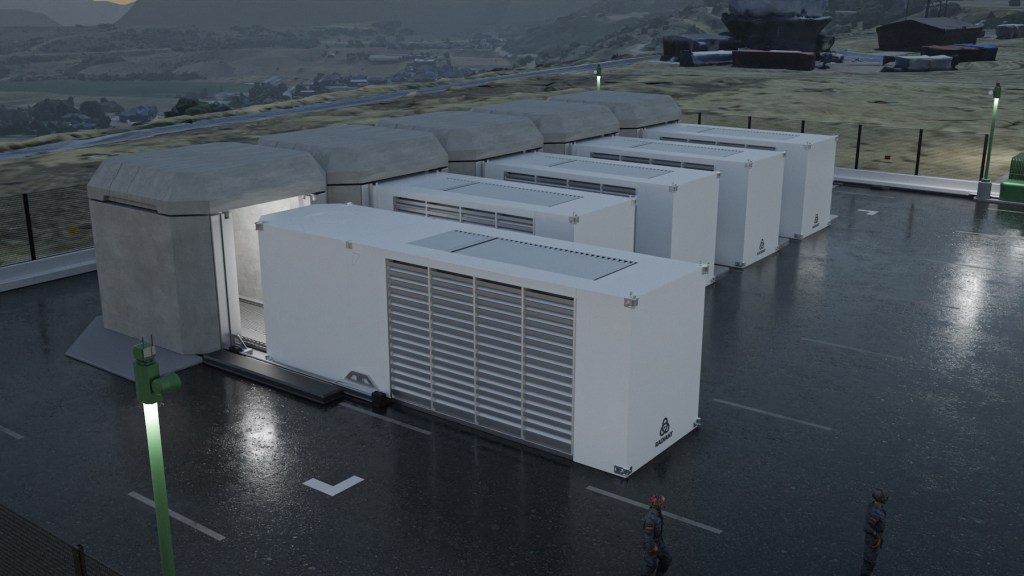
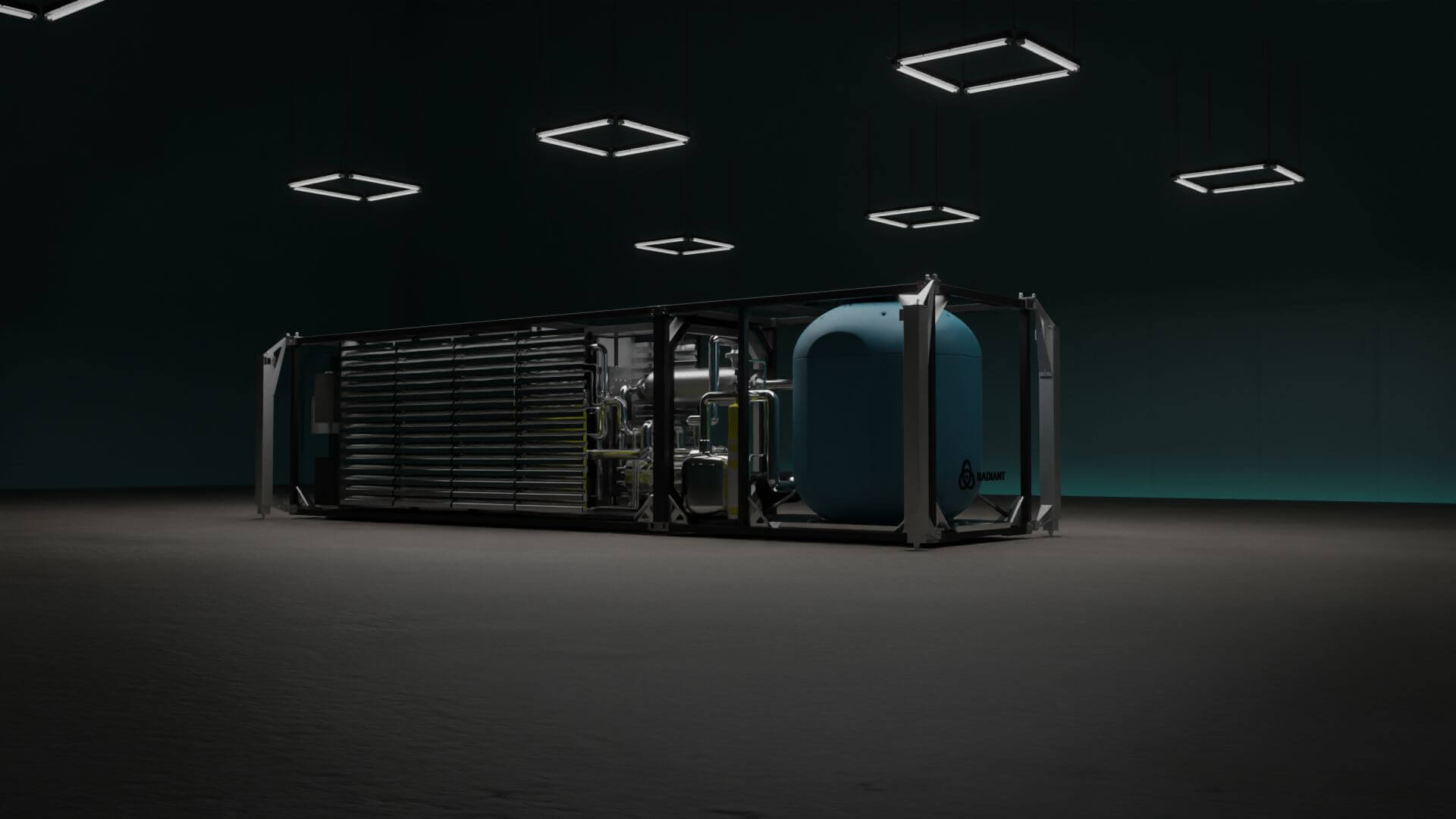
Radiant is a U.S. company developing Kaleidos, a portable one-megawatt nuclear microreactor that fits inside a shipping container, uses meltdown-proof TRISO fuel and helium cooling, and is designed to replace diesel generators at remote, commercial and military sites.
Radiant on video


Founders

Doug Bernauer
Founder & CEO
Former SpaceX engineer who founded Radiant in 2019 to build portable nuclear microreactors.

Bob Urberger
Co-founder
Former SpaceX engineer and Radiant co-founder focused on reactor hardware development.