TerraPower
Top 100
Illustrative curve — no price history on file for this company.
Funding
Raised a $650M round on Jun 19, 2025, bringing the total raised amount to $2B.
Top posts
Tracy Shuchart (𝒞𝒽𝒾 )
@chigrl
got natgas? "Neither Oklo nor TerraPower currently has regulatory approval to build a commercial system, and they’ve yet to prove they’re able produce power at a commercial scale" >>> Meta Deals Need $14 Billion in New Reactors, BloombergNEF Says Next-generation nuclear companies Oklo Inc. and TerraPower LLC will need to invest more than $14 billion in new reactors to support Meta Platforms Inc. data centers, according to estimates from BloombergNEF. That spending would deliver about 690 megawatts of fission capacity from TerraPower and 1.2 gigawatts from Oklo over the next decade, projects included in the hyperscaler’s sweeping set of nuclear deals announced last week. Neither Oklo nor TerraPower currently has regulatory approval to build a commercial system, and they’ve yet to prove they’re able produce power at a commercial scale. (Bloomberg)
Aakash Gupta
@aakashgupta
The US just approved construction of the first advanced nuclear reactor in over 40 years. This is a much bigger deal than people realize. Every nuclear plant operating in America today runs on technology designed before 1960. Water-cooled reactors. The same basic engineering as a steam engine with a radioactive heat source. For decades, the federal agency that approves new reactors simply stopped approving them. The last construction permit was issued in 1978. TerraPower, the company Bill Gates founded in 2008, just broke that streak. Their Natrium reactor uses liquid sodium instead of water as a coolant. Sodium transfers heat far more efficiently, operates at lower pressure, and doesn’t require the massive containment structures that make traditional plants so expensive. The design also pairs with a molten salt energy storage system that lets the plant ramp from 345 MW to 500 MW during peak demand. No other reactor design can do that. The federal safety review was supposed to take 27 months. It took 18. The regulators had never evaluated a sodium-cooled commercial reactor before, had to train their staff on an entirely new technology, and still finished 9 months ahead of schedule. That speed matters because the US is staring at an energy crisis most people haven’t priced in. Data center electricity demand is projected to hit 106 GW by 2035. That’s roughly 10x New York City’s peak summer load. Right now, committed new power supply falls 17 GW short of projected demand by 2030. The gap is widening every quarter. One Natrium reactor produces 345 MW and costs up to $4 billion. You’d need roughly 300 of them just to cover data center growth. At $4B each, that’s $1.2 trillion for a single demand category. China has 27 reactors under construction right now. The US just approved one. This permit is the proof of concept. It shows the American regulatory system can evaluate advanced nuclear technology at speed when the application is strong and the political will exists. The question is whether the US can turn one approval into a hundred before the lights start flickering.
Nick Touran
@whatisnuclear
Huge congrats to the TerraPower team on getting a construction permit for the Natrium SFR! The decades of work leading up to this moment are paying off!! (Historical sidenote though because I can't help myself, wouldn't Construction Permit No. CPPR-54 from the advanced commercial-scale HTGR Ft. St. Vrain Docket No 05000267 technically be the first CP meeting this criteria? It's usually only safe to say 'first ___ since 1980' in nuclear)
Derek Quick
@derekquick1
Uranium & Nuclear Energy Stock Squeeze via the Global AI Power Paradox is HERE, $1,000 Uranium is probable as it is the true bottleneck sector. U.S. Uranium producers have a smaller market cap combined than that of Dogecoin. Leopold Aschenbrenner dropped his Situational Awareness report in mid-2024 with charts that sounded insane about AI demand for power. He grew his fund from $225 million to $5.5 billion since investing in stocks related to the sector but he missed something. The real bottleneck is here, Uranium & Nuclear energy via baseload power. And that’s about to ignite the uranium/nuclear supercycle. The AI Power Paradox straight from the data. Page 77 in his report- by 2030 the largest single AI training cluster alone would need 100 GW >20% of total U.S. electricity production. Page 80-Table 5, overall AI compute training + inference across everyone hits 100% of current U.S. electricity and $8 T annual investment. Most people laughed. Now in 2026 the 2026 row he projected 1 GW clusters, 5% of U.S. power is already happening in real time. xAI Colossus, Meta Prometheus, Google campuses, Amazon nuclear-adjacent builds we’re living Leopold’s table. And the stocks that rode the first wave? Many are up 1,500% to $3500%. • NVDA GPU scaling is driving 300%+ increases in power needs every few years. H100 → Blackwell → Rubin racks now hit 100+ kW each. New chips are more efficient per FLOP, but cluster sizes are exploding so fast that total power draw still skyrockets. Some centers are postponed until they can find power. • Global data centers already consume 415 TWh annually. IEA base case: 945 TWh by 2030 which is double current levels. Some high-growth scenarios hit 1,000+ TWh even sooner. AI workloads -accelerated servers are growing 30% per year and driving almost half the increase. • Big Tech is dropping hundreds of billions in capex $130B+ in Q1 2026 alone from Microsoft, Google, Amazon, Meta. NVIDIA AI factories are city-scale: 100 MW to 1 GW+ per site. • Grids can’t keep up. Permitting, transformers 5-year backlogs, transmission bottlenecks, intermittent renewables all failing. Only reliable, always-on baseload works at this scale nuclear restarts + SMRs and nat gas. Renewables + batteries don’t cut it for 24/7 AI training/inference. Why Uranium & Nuclear Go Parabolic to $1,000/lb scenario, This is a tiny, supply-constrained market meeting explosive, urgent demand the classic squeeze setup as it has done in the cyclical past. • 85 million lb structural annual deficit (Goldman Sachs) from AI alone , 1.7B+ lbs over 20 years even with some new supply and no issues with current mines which is rare. The largest Uranium producer is establishing a reserve for new buildouts locking up cheap uranium the market expected. • U.S. reactors need 50M lbs/year. U.S. producers made <3% of that last year. Sprott Physical Uranium Trust alone now holds over 81 million lbs nearly 2 years of fuel for the entire U.S. fleet. There is a Russian Uranium ban now that really starts to take effect into 2027. • Mining lead times are 2+ years minimum even for permitted projects. You can’t just flip a switch. • Historically in the 1970s Big Oil flooded into uranium and mined hundreds of millions of lbs while America built 55 reactors in 10 years. Today? The Mag 7 and especially $NVDA ecosystem players have the capital to do the same, they’re already signing multi-GW nuclear deals Meta’s 6+ GW spree with Vistra/Oklo/TerraPower, Microsoft TMI restart, Amazon 1.9 GW PPA + SMRs, Google Kairos, etc. Securing power is now existential for AI growth. But we can now build nuclear FAR faster than the 1970s boom. SMRs (small modular reactors) are factory-built like Legos modules ship to site and assemble in 2–4 years vs 7–10+ years for traditional large reactors. -Global nuclear build out accelerating 70+ reactors under construction 400 operational 300+ permitting. DOE studies show 80% of retiring U.S. coal plants are perfect for coal-to-nuclear conversions, reuse the existing grid connections, cooling towers, switchyards, workforce, and sites for massive time/cost savings 15–35% cheaper. Advanced manufacturing, AI-optimized designs, 3D-printed components, and HALEU fuel make scaling even quicker. U.S. policy tailwinds are insane, Russian uranium banned, nuclear declared critical for national security and AI, funding for SMRs/fuel cycle, faster permitting. With U.S. national security at risk AI supremacy vs China, energy independence, powering the entire AI economy, the current administration in Washington is going all-in, executive orders streamlining NRC approvals, Defense Production Act on domestic uranium/fuel, co-locating SMRs with AI data centers, and treating nuclear as critical infrastructure. This is becoming a U.S. energy independence + GDP imperative. The Leverage Is Stupid At current $86.45/lb spot and $91.50 which is what matters most. Many U.S. producers are already profitable but have open contract windows like $UEC. • But when uranium moves to $120–$200 sustained (or higher in a true squeeze) margins explode. • $UEC at a $37 cost to produce Uranium-From $87 → $200 = +220% margin. From cycle lows? 4,000% increase in margins. • At $1,000/lb? Profit jumps to $964/lb +1,792% vs current in a 19× margin expansion. Even from low-cycle $40, it’s +24,000%. Equities will go nuclear long before the commodity fully reflects it. Uranium stocks are leveraged plays on the price of uranium- Like a 0DTE contract but more volatile. Now people hear $1,000 and think this is expensive, well Raw uranium is still a tiny fraction of total costs. Full front-end fuel, uranium + enrichment + fabrication is only 15-20% of total electricity cost for new nuclear plants and 17% for operating plants per NEI data. Raw uranium concentrate itself is less than 10% of overall generating costs (often 5-8% of LCOE or 0.377 ¢/kWh). Even at $1,000/lb, it barely moves the needle on total power price for reactors or AI data centers capital costs and buildout dominate. This is why hyperscalers and utilities can absorb parabolic uranium prices without killing economics. U.S. uranium producers combined are still smaller than meme coins. $UEC, $UUUU, $LEU and the handful with real assets/claims in Texas/Wyoming/West are sitting on billions of lbs of historic resources ready to restart once price justifies it. The 1970s Uranium claim maps are locked and loaded. This is the Global AI Power Supercycle, Leopold’s 2030 vision was the warning shot and everyone flooded to Semiconductors $SNDK +3,350% 1 year, and other forms of energy $BE+1,667% 1 year. But the market is still asleep to what baseload nuclear/uranium actually means for the next decade. Big Oil → Big Tech nuclear M&A wave incoming. Uranium equities will massively outperform the commodity itself even those that are not making any cashflow. A Uranium Squeeze is coming. The funny thing is, Leopold didn't get much traction either when he posted his paper for free, he did get hundreds of millions in funding to invest which paid off. Who else sees the power bottleneck as the next 10x leg? $NVDA made the chips. Now nuclear makes the baseload power. The Uranium squeeze is just getting started.
Isotope Economy
@IsotopeEconomy
$ASPI / QLE in relation to today's DOE Genesis / Prometheus news 1. DOE selected Prometheus as largest award: $60M over 3 years for AI-enabled workflows in nuclear reactor design, licensing, mfg, construction, operation + fuel fabrication + legacy docs. Partners include TerraPower (among 32 total). 2. $ASPI /QLE public agreements with TerraPower (May 2025 filings): conditional term loan commitments for HALEU facility construction + supply agreements for initial Natrium core and subsequent deliveries. 3. QLE operations: proprietary enrichment for HALEU/LEU+; facilities in development (Pelindaba confirmed, Texas JV discussions); $ASPI to receive 10% perpetual royalty + potential equity distribution upon QLE listing. All per SEC filings and DOE release.
Big Brain AI
@realBigBrainAI
Bill Gates on building next-generation nuclear power and the honest truth about AI's impact on jobs: Gates makes clear that deploying advanced nuclear reactors like TerraPower's requires a very specific kind of siting strategy: "We need to put things like TerraPower nuclear reactors in places where it's very clear that you're not raising the residents' electricity bills because that's being put in there." The old financial model, where utilities absorbed the risk and liability of nuclear projects, is gone for good: "Historically, nuclear was done in a way that the utility bore a lot of that liability. That business model won't get repeated." His conclusion is straightforward: location selection has to be driven by both economics and public trust. Communities need to see a clear benefit, not a cost. "We don't have permission to drive up people's electricity costs." On the jobs question, Gates refuses to soften the message the way others might: "Although it hasn't been seen in large numbers, over the next several years there will be some impact on the job market." @BillGates acknowledges that this is a politically uncomfortable thing to say. Some people push back and worry it will slow the US down in the global technology race. But he holds the line anyway: "It's only honest for people to speak frankly about the fact this will have a big effect on the job market." The throughline in Gates' thinking is a kind of disciplined honesty. Whether he's talking about where to site a nuclear plant or what automation will do to employment, he's not interested in telling people what they want to hear. He's interested in what's actually true — and what that means for the decisions ahead.
Latest news

Public companies tied to TerraPower
About TerraPower
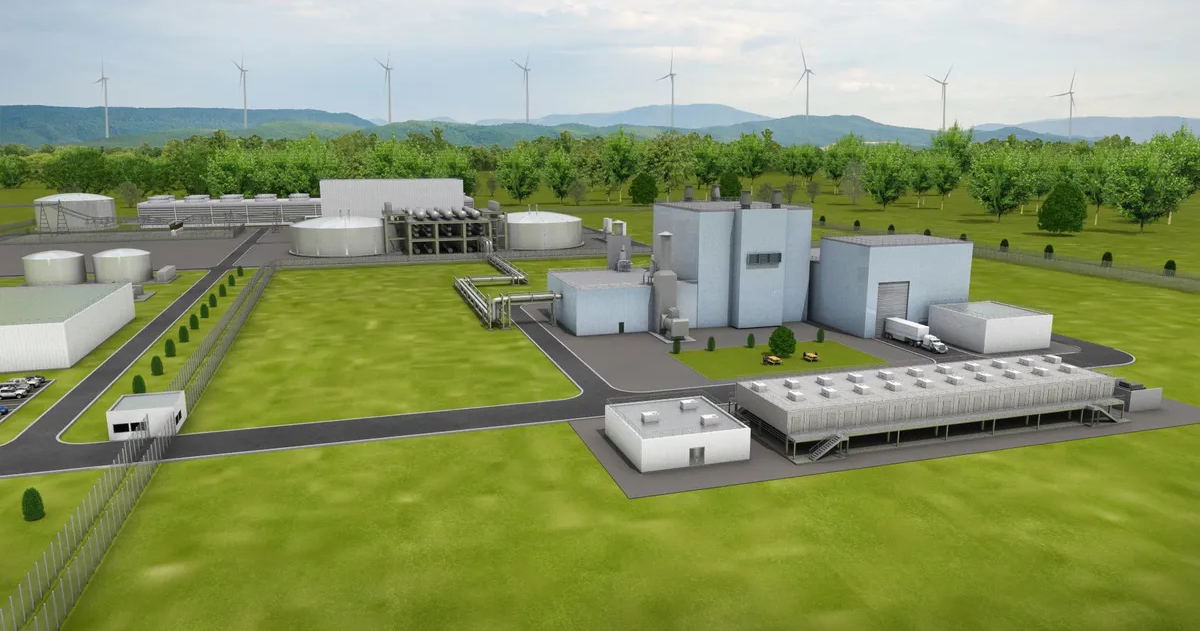
TerraPower, founded by Bill Gates, develops advanced nuclear reactors, led by its Natrium design, a 345 MWe sodium-cooled fast reactor paired with a molten-salt energy storage system that can boost output to 500 MWe. In 2026 it received the first NRC construction permit ever issued for a commercial non-light-water reactor and began building its flagship Natrium plant in Kemmerer, Wyoming. The plant is targeted for completion around 2030.
TerraPower on video
 13:51
13:51The Genius Behind Bill Gates' New Natrium Reactor
Dr Ben Miles · Documentary
 6:18
6:18Why Bill Gates' New Natrium Reactor is a Big Deal
Sabine Hossenfelder · Feature
 5:12
5:12Bill Gates on next-generation nuclear power technology
CBS Sunday Morning · Interview
 4:56
4:56TerraPower CEO Chris Levesque on next-gen nuclear power
CNBC Television · Interview
 11:53
11:53Our clean energy future requires a novel approach to nuclear
TEDx Talks · Talk
Founders
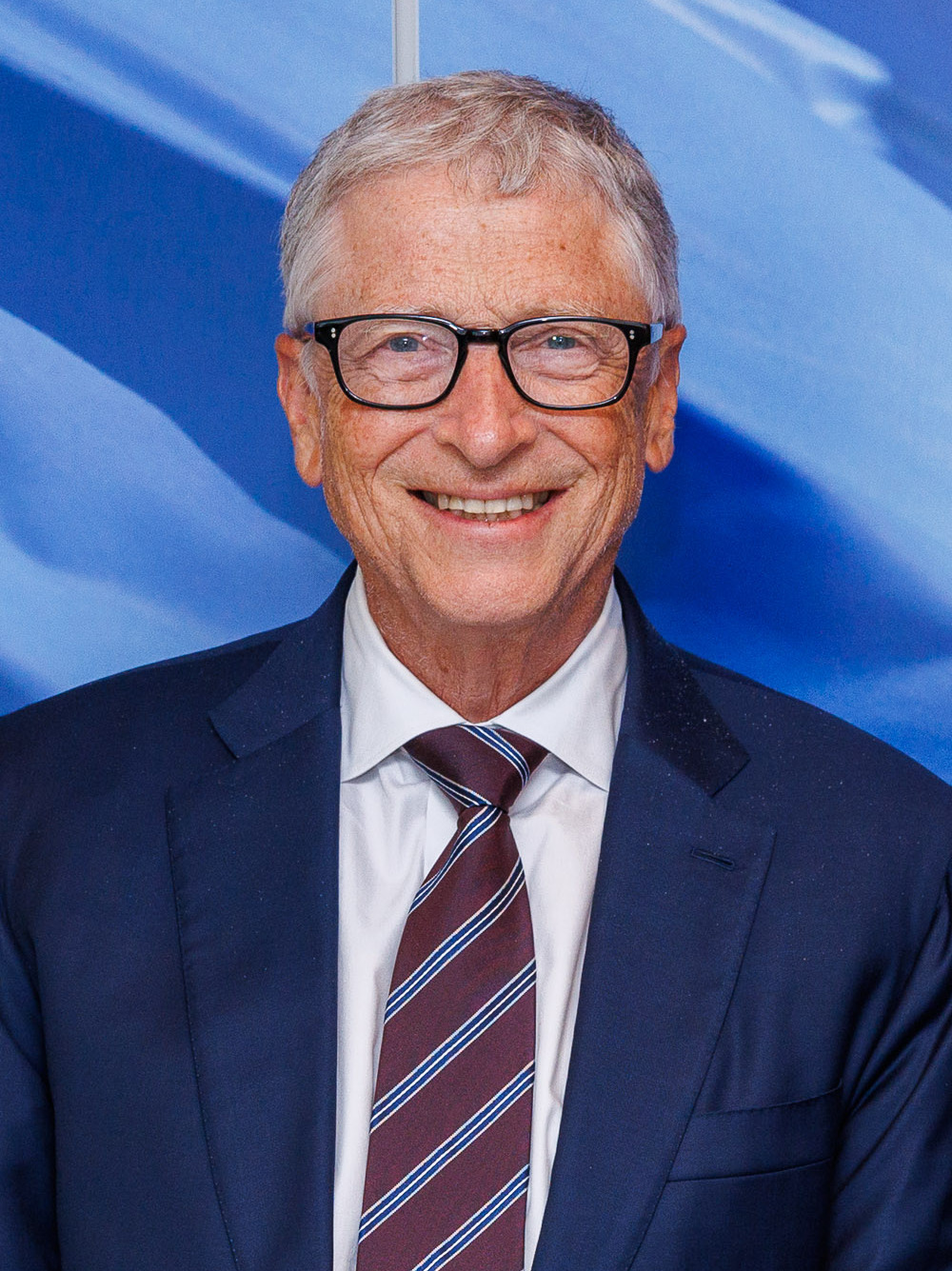
Bill Gates
Founder & Chairman
Microsoft co-founder who launched TerraPower in 2006-2008 out of Intellectual Ventures to develop advanced nuclear reactors.
Nathan Myhrvold
Co-founder
Former Microsoft CTO and founder of Intellectual Ventures who co-founded TerraPower alongside Bill Gates.
John Gilleland
Co-founder & former CTO
Nuclear physicist who served as TerraPower's founding chief technology officer and led its early advanced-reactor development.