
Stripe
Top 100
Funding
Raised a new round on Feb 24, 2026, bringing the total raised amount to $10B.
Returns Calculator
A $10,000 investment at Seed round (2011) would today be worth:
$79,500,000
7,950×the original amount
Illustrative · based on reported post-money valuations
Top posts
Jack Zhang
@awxjack
Stripe offered to acquire us for $1.2 billion when we had $2M in revenue. Today, we've raised $330M at an $8B valuation and reached $1B ARR. We could've died three times during this journey. This is the story I've never told anyone before: https://t.co/Tv1wvlrkOM
Wall St Engine
@wallstengine
HOW SITUATIONAL AWARENESS’S $45B FUND UNRAVELED: Leopold Aschenbrenner, a 24-year-old former OpenAI superalignment researcher, launched Situational Awareness in 2024 after publishing a viral 165-page essay arguing that most of the world was underestimating how quickly AI would advance. The fund was built to profit from that thesis through concentrated investments in companies expected to benefit from AI across semiconductors, energy, infrastructure and software. Its investors included Stripe co-founders Patrick and John Collison, senior AI executives at Meta and Jane Street. Some investors committed at least $25M and agreed to lock up their capital for years. As the returns accumulated, money and attention crowded around Aschenbrenner. His regulatory filings were treated by many investors as a guide to the AI trade, and stocks publicly associated with Situational became increasingly visible. Major banks also lined up to finance the fund. By May, Situational was up roughly 270% net for the year and more than 1,000% net since inception, with well over $20B under management. The WSJ now describes it as a $45B fund. The problem was how those returns were being generated. For every $1 of capital, Situational borrowed another $3 to $4, and sometimes more, while also using options to increase its exposure. That worked while its concentrated AI positions were rising, but left the fund with little room to absorb a broad decline. Goldman Sachs, JPMorgan, Citigroup and Bank of America were among the banks financing its trades. Earlier this year, the fund reportedly approached additional banks seeking even more borrowing capacity. As recently as July 10, confidence remained high enough for Situational to serve as an anchor investor in SK Hynix’s $27B U.S. listing. But by the middle of July, sentiment around the AI trade began to change. The emergence of cheaper Chinese open-source models raised questions about how much value would ultimately remain with the semiconductor, infrastructure and cloud companies supporting AI. Investors began reducing exposure to the trade, hitting stocks associated with Situational, including SK Hynix, Sandisk, Bloom Energy, Nebius, CoreWeave and Core Scientific. The selloff was broader than one fund. Over the three trading days through Tuesday, hedge funds reduced positions at a pace not seen in three years, according to Goldman Sachs. For Situational, however, the leverage made the decline much more damaging. Banks began monitoring the fund’s performance daily and issued margin calls requiring additional collateral. Other hedge funds reportedly shared information about Situational’s positions and shorted some of its largest holdings, expecting the fund would eventually be forced to sell. That created a feedback loop. Falling prices produced margin calls, margin calls forced Situational to sell, and those sales placed further pressure on the same stocks. Aschenbrenner later compared the process to a bank run. Because many LPs were locked into the fund for years, this was not primarily a rush of investors demanding their money back. The immediate pressure came from prime brokers demanding collateral and other traders positioning for forced liquidations. All of this unfolded during the week of Aschenbrenner’s wedding. As guests began arriving in Carmel for the multiday celebration, he and his team were negotiating late into the night to keep the fund operating. Late Wednesday, Aschenbrenner reached an agreement to sell Situational’s $3.5B Anthropic stake to a group led by Greenoaks and Sequoia. By Thursday morning, he had reversed course, deciding to preserve the private-company portfolio and sell public stocks instead. Citadel and Millennium then negotiated with Situational past midnight. Citadel ultimately reached a deal just before Thursday’s open to buy the vast majority of the fund’s public-equity portfolio at more than a 10% discount to prevailing market value. That discount came on top of the losses those stocks had already suffered. It was not a discount to Situational’s original purchase prices. Citadel then benefited from an immediate rebound as many of the acquired AI and semiconductor stocks rallied Thursday. Situational had met its margin calls through Wednesday and had not formally defaulted. The Citadel transaction was an emergency deleveraging that allowed the fund to repay its lenders and retain private-company stakes valued at more than $10B. The fund finished July down 67%, though its investor letter said it remained up roughly 80% YTD. It plans to continue operating and investing in public equities, but will stop using bank leverage and make changes to its portfolio-management and risk teams. “I take full responsibility for these events,” Aschenbrenner told investors. In a 2024 interview, he had described the central rule of his investment strategy more simply: “Not blowing up is task No. 1 and 2.”
TECA
@CryptoTeca__
In the AI inference world, a new market is quietly taking shape. Tokenized access rights and surplus compute are beginning to form a liquid capital market for AI intelligence. Instead of AI access being consumed once and forgotten, it can now be owned, traded, resold, and routed across decentralized networks. Three key segments are driving this shift: ▸ Access marketplaces (@UsePodAI, @squire_bot, @AskSurplus, @AntSeedAI, @InferraTrade) — resell unused credits (Anthropic, OpenAI, Venice DIEM) at 20–80% discounts, settling in USDC/SOL/Stripe. Buyers hit the same models at sub‑$0.10/M tokens. ▸ Routing infrastructure (@ArcaGateway, @SolRouterAI, @Omniousai) — single OpenAI-compatible endpoint with live scoring, caching at half‑price, auto-failover, and verifiable privacy (MPC/TEE proofs). Arca frames itself as the agent order‑flow layer. ▸ Decentralized inference networks (@AskVenice, @chutes_ai, @dphnAI, @MorpheusAIs, @openservai, @wardenprotol, @ambient_xyz, @prlnet) — decentralized providers turning prompts into outputs. Venice peaks at 50–80B+ tokens/day with multi‑million‑dollar ARR, DIEM perpetual credit (~$1/day), and VV capital asset. Chutes and Dolphin push serverless/censorship‑resistant inference with tokenized ownership (POD). Together, these networks are transforming AI compute into a liquid asset. Instead of simply paying for API calls, users can own perpetual access, trade unused capacity on secondary markets, or earn value from routing demand across providers. Venice currently leads the sector, reaching peaks of 50–80B+ tokens processed per day while generating multi-million-dollar ARR. Its DIEM token introduced perpetual daily inference rights, effectively turning AI access into a tradable utility. UsePod extended this model by creating a marketplace for unused Venice capacity, while Arca is building the routing layer that directs agent order flow across inference providers. Collectively, more than 15 projects are already processing significant onchain AI demand at costs below $0.10 per million tokens. One of the most interesting developments is how early Venice introduced DIEM. Rather than treating inference as a subscription, it turned access into an asset that users can hold indefinitely. The next major opportunity may not be winning the largest network. It may be becoming the first inference protocol that consistently attracts sustainable paid demand beyond token incentives.
Alfonso
@alfongj
My theory on what Stripe is after with the $10B offer for OpenRouter - something bigger than what everyone is thinking. https://t.co/EqlGKMYd6F
Nick Research
@Nick_Researcher
➥ from narrative-driven crypto before 2025 to finding PMFs in 2026 i’ve spent years trading crypto narratives → DeFi in 2020 → NFTs, P2E and GameFi in 2021 → L1/L2 competition in 2022 → Restaking in 2024 back then, one strong narrative could pull an entire sector higher but 2025 took this model to the extreme - we rotated narratives as a close loop, lack of liquidity - each narrative lasted a month or less now 2026 feels very different - no single narrative pushing the whole market higher - capital is concentrating around products that already have demand stablecoins, DeFi, RWA, prediction markets and memecoins have all survived a difficult market [1] stablecoins = settlement infra @Stable | @arc | @tempo | @Theo_Network the combined market cap of non-dollar stablecoins is still only around $1.2B but the number of wallets holding them increased from 40,000 in January 2023 to 1.2M by March 2026 that is a 30x increase in holders more than 140 companies, including Visa, Mastercard, Stripe, Coinbase and BlackRock, etc joined the sector [2] DeFi = financial infra protocols that survived adjusted to what users and institutions actually needed @aave | @Morpho | @Uniswap | @HyperliquidX the original DeFi ideology became less important than execution, liquidity and product quality [3] RWA = efficiency institutional efficiency has become the larger opportunity @Ondo | BlackRock BUIDL | @maplefinance | @tradexyz DTCC | @Securitize | bStocks | @xStocksFi [4] PMs are proving demand without tokens leading platforms grew without relying on native tokens @Kalshi | @Polymarket | @42space bringing demand from outside the normal crypto user base ppl may visit to trade elections, sports or macro events without caring which chain processes the txns [5] Memecoins have PMF too memecoins do not generate value through demand from speculation, identity, community and volatility memecoins happen everywhere hottest playground is now belonged to: @RobinhoodCrypto | @Stable | @BNBCHAIN | @solana that is real user and liquidity acquisition [6] what actually changed in 2026? i think demand has split into 2 clear groups a) speculative demand - memecoins, perp DEXs - prediction markets b) financial demand - stablecoins, RWA and DeFi serve payments - settlement, lending, collateral - yield and risk management both are valid forms of PMF one more thing, protocol PMF does not automatically mean token PMF a product can have millions of users and strong revenue while its token has weak value accrual beware and stay safe from those tokens, gud luck to y'all
Abhishek Singh
@0xlelouch_
Top 10 resources to learn API design (practical, for people shipping + on call): 1) Google Cloud API Design Guide. Strong defaults for resource naming, long-running ops, pagination, filtering. 2) Microsoft REST API Guidelines. Clear rules for consistency, error shapes, versioning, and what to do when you break contracts. 3) Designing Web APIs (O’Reilly). Good coverage of HTTP semantics, caching, pagination, and evolvable contracts. 4) API Design Patterns (JJ Geewax). Concrete patterns for resource modeling, batch, partial updates, and async workflows. 5) IETF RFC 9110 (HTTP Semantics). The source for idempotency, safe methods, caching behavior, and status code meaning. 6) OpenAPI Specification + tooling. Writing the contract first forces you to answer auth, errors, schemas, and compatibility. 7) Stripe API docs. Great examples of idempotency keys, pagination, expandable fields, and predictable error codes. 8) Twilio API docs. Practical patterns for long-running work, webhooks, retries, signature verification, and debugability. 9) Zalando RESTful API Guidelines. Solid on naming, versioning, and consistent error payloads across teams. 10) Practice project: build a small API and operate it for a month. Add rate limits, auth, idempotent POST, cursor pagination, ETags, and a deprecation plan with real clients calling it daily
Latest news

Public companies tied to Stripe


About Stripe

Stripe is an Irish-American financial infrastructure company providing payments, billing, and treasury APIs for internet businesses. It processed $1.9 trillion in total payment volume in 2025.
Stripe on video
 57:14
57:14Running Your Company by Patrick Collison
Y Combinator · Talk
 1:55:31
Patrick Collison — Why Silicon Valley's Best Should Leave
Dwarkesh Patel · Interview
 50:15
50:15Patrick Collison on Programming Languages, AI & Stripe
Cursor · Interview
 2:26:18
Patrick Collison — CEO of Stripe | The Tim Ferriss Show
Tim Ferriss · Interview
 30:32
30:32Stripe Co-founder John Collison | Full Interview
On with Kara Swisher · Interview
Founders


Key leaders
Recent hires

Eileen O'Mara
Vice Chair
Previously at Salesforce and Oracle · Dublin and New York
Joined Jun 2026

Manish Maheshwari
Head of Revenue and Growth, India
Joined Jun 2026
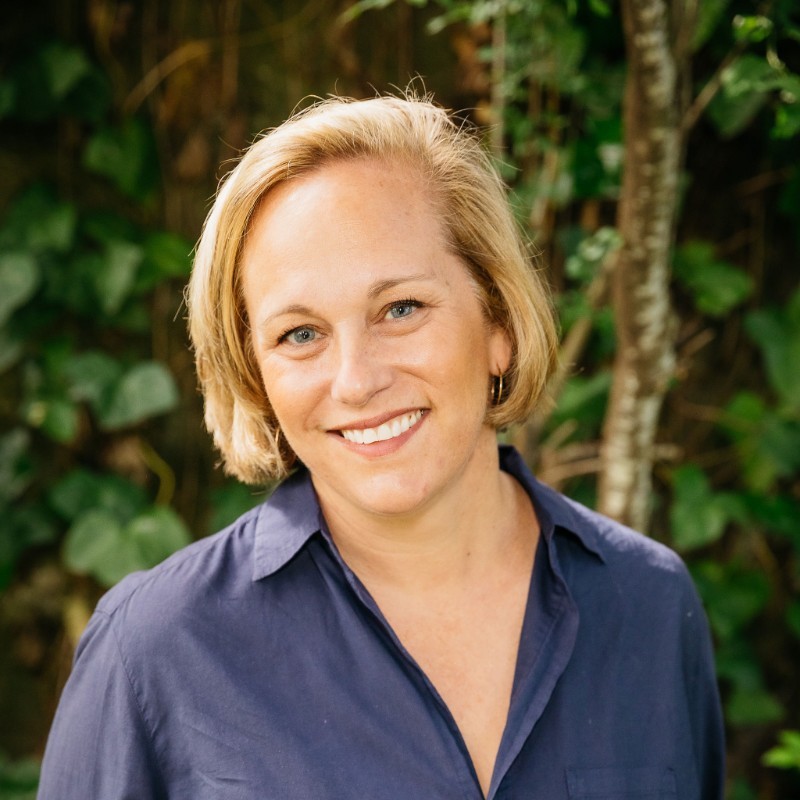
Betsy M. Dobbin
Head of Marketing, Link
Previously at B. Dobbin Consulting · San Francisco Bay Area
Joined May 2026
Kivanc O.
Head of Money Management Partnerships
Previously at Payoneer · New York, New York, United States
Joined Jun 2026

Lauren Winder
Content Activation Lead
Previously at Quiq · Eugene, Oregon, United States
Joined Jun 2026

Sonali Parthasarathy
Engineering Leader
Previously at Instacart · San Francisco, California, United States
Joined May 2026