
Databricks
Top 100
Funding
Raised a $5B round on Feb 9, 2026, bringing the total raised amount to $20B.
Returns Calculator
A $10,000 investment at Series A round (2013) would today be worth:
$27,526,705
2,753×the original amount
Illustrative · based on reported post-money valuations
Top posts
Yuchen Jin
@Yuchenj_UW
Super cool work from Databricks AI research team. Data agents are harder than coding agents. Coding agents have verifiable tests. Data agents have to find “truth” across millions of tables, docs, dashboards. Databricks Genie got to 91.6% accuracy, while the leading coding agent only got 32% on enterprise data analysis tasks. Specialized knowledge search + Parallel Thinking + Multi-LLM is the key. Databricks has an amazing research team, and I've been enjoying working with them!
Tomasz Tunguz
@ttunguz
Databricks started later. It built a more complex architecture. It focused on unstructured data; images, documents, logs, audio. Though vast within the enterprise, this data had historically produced little insight. Too hard to process. Too messy to query. Too expensive to store in formats that mattered. Snowflake took the opposite bet. Structured data. Clean tables. SQL queries that ran fast & returned answers executives could read. The market agreed. Snowflake went public at a $70 billion valuation. Databricks raised private rounds at half that. Then AI arrived. Suddenly the data that was too messy to query became the data that models needed to train. Unstructured data wasn’t a liability. It was the asset. Databricks has overtaken Snowflake in revenue. Two years ago, Snowflake led by $220 million per quarter. Today, Databricks leads by $120 million. Databricks’ growth rate is accelerating at scale, from 50% to 55% to 65% year over year. Growth rates don’t accelerate at $5 billion in revenue. The crossover happened because AI is an architectural transition, not a feature addition. Most enterprise data never made it into Snowflake. It sat in object storage, unstructured, waiting. Databricks built tools to use it there. No migration required.
Jamin Ball
@jaminball
Awesome job by the @databricks team My summary: They trained a model called KARL that beats Claude 4.6 and GPT 5.2 on enterprise knowledge tasks (searching docs, cross-referencing info, answering questions over internal data), at ~33% lower cost and ~47% lower latency. The key insight: instead of throwing expensive frontier models at enterprise search, you can use reinforcement learning on synthetic data to train a smaller model that's faster, cheaper, AND better at the specific task. RL went beyond making the model more accurate. I t learned to search more efficiently (fewer wasted queries, better knowing when to stop searching and commit to an answer). They're opening this RL pipeline to Databricks customers so they can build their own custom RL-optimized agents for high-volume workloads. I think we'll continue to see data platforms become agent platforms. Databricks' KARL paper is really an agent platform play. The pitch: you already store your enterprise data in the Lakehouse, now Databricks will train a custom RL agent that searches and reasons over it, tuned specifically for your highest-volume workloads (workloads = apps = agents). The business move is closing the loop: data storage → retrieval → custom agent training → serving, all on Databricks. They're turning "your data lives here" into "your agents live here too." Kudos @alighodsi @matei_zaharia @rxin
Amjad Masad
@amasad
Replit now deploys directly to Databricks. Your apps run inside your Databricks environment while inheriting its security, governance, and data access. Beta is live. Enterprises are already building with it and seeing massive acceleration in BI and internal tools. https://t.co/O33uJHohgo
Shay Boloor
@StockSavvyShay
$NOK is expanding its autonomous network push with $AMZN AWS and Databricks. Nokia is packaging agentic AI, digital twins and closed-loop operations into a platform it says has already helped operators reach 90%+ automation and cut network slice rollout times by up to 85%. https://t.co/JOIliQKCmf
vas
@vasuman
Imagine joining Databricks in 2017 at their Series D thinking oh boy the IPO is just around the corner and then 9 years later you raise a Series M
Hiring Signal
Based on public job postings · updated monthly
Latest news
Public companies tied to Databricks

About Databricks
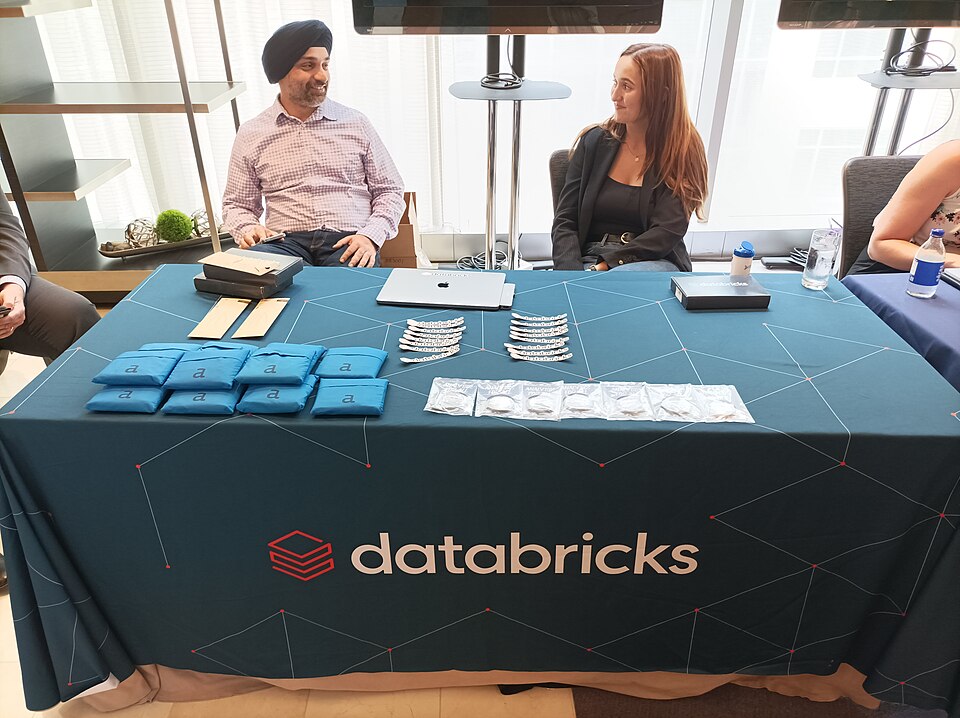
Databricks is an American data-and-AI company built around the open-source Apache Spark and the 'lakehouse' architecture, serving enterprises for data engineering, analytics, and AI. It surpassed a $4B+ revenue run-rate in 2026.
Databricks on video
 22:13
22:13Ali Ghodsi kicks off Data + AI Summit 2025
Databricks · Keynote
 57:55
57:55Ali Ghodsi kicks off Data + AI Summit 2026
Databricks · Keynote
 17:43
17:43Under the hood of the AI economy: Databricks CEO Ali Ghodsi
CNBC Television · Interview
 17:37
17:37Databricks CEO on Unifying Data & AI Agents
Bloomberg Live · Interview
 8:45
8:45Databricks CEO Ali Ghodsi: AI has a context problem
CNBC Television · Interview
Founders

Ali Ghodsi
Co-founder & CEO
CEO of Databricks; UC Berkeley adjunct professor and Apache Spark contributor.

Matei Zaharia
Co-founder & CTO
Creator of Apache Spark; CTO of Databricks and Stanford professor.
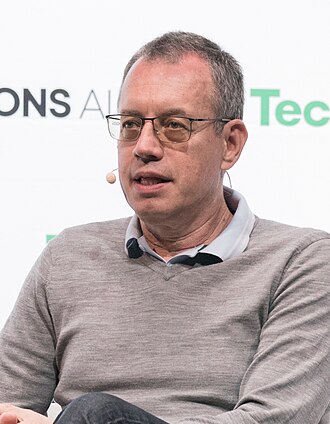
Ion Stoica
Co-founder & Executive Chairman
UC Berkeley professor; co-founder of Anyscale and Conviva.

Reynold Xin
Co-founder & Chief Architect
Lead developer of Apache Spark; chief architect at Databricks.

Patrick Wendell
Co-founder & VP Engineering
Apache Spark committer; VP of engineering at Databricks.

Andy Konwinski
Co-founder
Co-founder of Databricks and later co-founder of Perplexity.

Arsalan Tavakoli-Shiraji
Co-founder & SVP Field Engineering
Co-founder; leads field engineering at Databricks.
Key leaders

Dave (David) Conte
Chief Financial Officer
Longtime CFO overseeing Databricks’ global finance, capital raising and investor relations.
Andy Kofoid
President, Global Field Operations
Leads worldwide sales and go‑to‑market as president of global field operations.
Amy Reichanadter
Chief People Officer
Heads Databricks’ people function, including HR, culture and talent strategy.
Trâm Phi
Senior Vice President and General Counsel
Oversees legal, compliance and corporate governance as senior vice president and general counsel.

Hatim Shafique
Chief Operating Officer
Runs company‑wide operations and execution as chief operating officer.
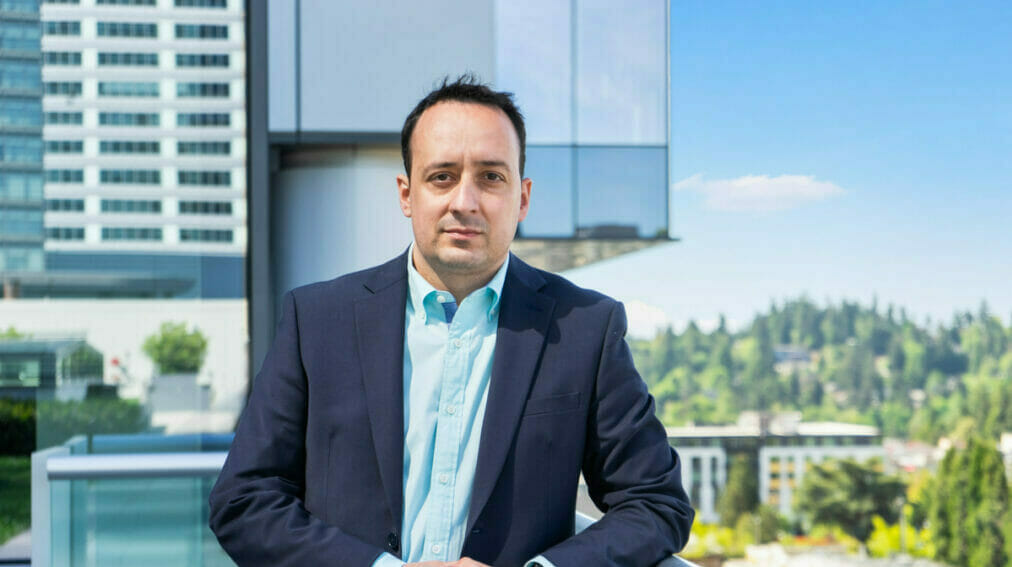
Fermín Serna
Chief Security Officer
Leads enterprise security strategy and programs as chief security officer.
Recent hires
Simon Davies
Senior Vice President and General Manager, Asia Pacific & Japan
Singapore
Joined Apr 2026
Corrie Briscoe
Vice President of Partnerships and Alliances, Asia Pacific & Japan
Singapore
Joined Apr 2026
Sam Sebastian
Senior Vice President
Previously at Google · New York, New York, United States
Joined Jun 2026

Vivek Srikantan
Director
Previously at Yubi · Bengaluru, Karnataka, India
Joined Jun 2026

John Lyle
Engineering Director
Previously at Unobravo · London, England, United Kingdom
Joined May 2026

Samuel Dovey
Client Director
Previously at Neptune Software · London, England, United Kingdom
Joined May 2026