
PsiQuantum
Top 100
Funding
Raised a $1B round on Sep 10, 2025, bringing the total raised amount to $2B.
Returns Calculator
A $10,000 investment at Series D round (2021) would today be worth:
$22,222
2.2×the original amount
Illustrative · based on reported post-money valuations
Top posts
Molly O’Shea
@MollySOShea
NEW: Inside @PsiQuantum's Silicon Photonic Chipset *Never-Before-Seen* With Er-Xuan Ping, SVP, Barium Titanate (BTO) Development Backdrop: the U.S. government just announced a $2B push into domestic quantum computing manufacturing - but what does that actually fund? The @CommerceGov Department recently awarded PsiQuantum $100M to accelerate development of BTO, giving a rare look into the underlying manufacturing stack required to scale fault-tolerant quantum computing. We profiled PsiQuantum last September following its $1B Series E, including how the company produces the world’s highest-performing optical switch - a core component of its silicon photonics platform. PsiQuantum is currently the only company or institution in the world manufacturing this BTO material for optical switches at 300mm scale. While the company built this silicon photonics platform for fault-tolerant quantum computing (FTQC)*, the implications may extend far beyond quantum itself. As AI data centers increasingly shift from copper to optical networking, PsiQuantum’s photonics stack could also become foundational infrastructure for next-generation AI systems. *Fault-tolerant quantum computing (FTQC) refers to quantum computers that can continue operating accurately even when individual quantum bits (“qubits”) are noisy or error-prone. Shoutout to @PeteShadbolt
Desmond
@DesFrontierTech
$IONQ The Trump administration announced this morning that it is awarding $2 billion in CHIPS Act grants to nine quantum computing companies and taking minority equity stakes in each. IBM received $1 billion. GlobalFoundries received $375 million. D-Wave, Rigetti, Infleqtion, Atom Computing, PsiQuantum, and Quantinuum each received $100 million. Diraq received $38 million. IBM separately announced the establishment of Anderon, a new independent quantum chip foundry in Albany, New York, funded by IBM's $1 billion CHIPS grant plus an additional $1 billion of IBM cash. Anderon will manufacture superconducting qubits and serve quantum hardware companies worldwide. IonQ is not on the grant recipient list. First. Five weeks ago at Quantum Day at the New York Stock Exchange, IonQ's CEO Niccolo de Masi delivered the opening keynote. He said: "Quantum in just the last year has gone from a small business that you might be able to sit on the sidelines of for a few years into something that you need not just for an advantage, but potentially to survive against your competitors." de Masi described the moment when quantum became existential. The U.S. government distributing $2 billion across nine quantum companies plus IBM building Anderon is that moment arriving in federal policy. Second. Three days ago at the J.P. Morgan technology conference, IonQ's CFO and COO Inder Singh was asked about Quantinuum, IonQ's direct competitor. Singh said: "I do think that we need to have a number of really successful companies 3 to 5 years out for this to become an industry. And I'd love for them to do the same investments we're doing in the ecosystem." Other quantum companies have to succeed. Other quantum companies have to invest. Three days later, eight other quantum companies received federal capital plus government equity stakes. IBM committed $1 billion of its own cash to a new foundry that will serve the whole industry. IonQ's two top leaders called both pieces of this story before it broke. IonQ does not need the grant. IonQ has more than $3 billion in cash and investments. IonQ has its own U.S. foundry partner in SkyWater. IonQ has the customers, the patents, and the platform. What just happened today is the industry forming around IonQ.
outside five sigma
@jwt0625
psiquantum has convinced me that although it's not easy, you absolutely can bruteforce large scale cryogenic systems even for 4 K. few millions concurrent photonic qubits, tens of thousands of photonic chips, a few hundred fridges, tens of kW total cooling at 4 K, tens of MW total power consumption including lasers etc. Psiquantum folks correct me if I got some of the oom wrong. maybe they should do quantum compute in space, the photonics chips are probably much more radiation tolerant (theres still plenty of logic chips), and you shield it like JWST lol
Sachin and Adam
@Sachin_and_Adam
Exclusive: Inside @PsiQuantum The $7B startup backed by NVIDIA, BlackRock and Founders Fund, building the world’s largest quantum computer. 0:00 Inside The $7B Quantum Giant 0:49 The Race to 1 Million Qubits 2:01 Pete: “AI Cannot Solve This” 3:36 This Is The Next $1 Trillion Sector 5:12 Live Tour: Pete Opens the Machine 9:18 The Alien Tech Inside Every Chip 11:07 Pete Has Zero Doubt 13:03 “Quantum by end of decade”
Hanna353
@HannaSuds
$IonQ $Skyt According to a careful review, it is clear: The CHIPS Quantum Solicitation Remains Open Continued Eligibility for IonQ and SkyWater Following a Merger Decision. I strongly suggest any $IONQ or Skywater to take review this, then draw your own conclusions. Overview The central conclusion of this briefing is straightforward: the U.S. Department of Commerce’s CHIPS quantum funding effort is not closed. The $2.013 billion in letters of intent that Commerce announced on May 21, 2026 represents what the agency itself describes as an “initial portfolio,” and the underlying funding vehicle—a Broad Agency Announcement that remains open through 2029—continues to accept proposals from eligible applicants on a rolling basis [G1, G3, G4]. On the strength of the government’s own statements, there exists a verifiable, open channel through which additional quantum companies may seek federal support. This document sets out that conclusion in detail and, throughout, draws a deliberate line between what the government has stated as fact and what is reasonable inference drawn from those facts. Based on the eligibility criteria described in the Broad Agency Announcement, IonQ and SkyWater appear likely to satisfy the threshold eligibility requirements, as domestic for-profit entities advancing microelectronics and quantum-related technology; however, Commerce has not made any public, company-specific eligibility determination. On that basis, either entity could, in principle, pursue participation regardless of the timing or outcome of their pending merger. 1. The Funding Channel Is Open, Not Closed The instrument behind the quantum awards is a Broad Agency Announcement, designated 2025-NIST-CHIPS-CRDO-01 and administered by the CHIPS Research and Development Office of the National Institute of Standards and Technology. According to the announcement document published by NIST, the office “is soliciting proposals from eligible applicants for research, prototyping, and commercial solutions that advance microelectronics technology in the U.S.” [G3]. The announcement is formally typed as “Initial,” it contemplates a maximum project performance period of five years, and it provides that awards will take the form of Other Transaction Agreements issued under 15 U.S.C. § 4659(a)(1) [G3]. The timeline confirms that no closing date has passed. The https://t.co/fooOTUWmO6 opportunity listing records that the opportunity was posted on September 24, 2025, with an archive date of October 30, 2029 [G4]. Independent legal analysis of the announcement reaches the same conclusion, reporting that the opportunity is active through September 2029 and that awards will be issued on a rolling basis [S1]. There is, in short, no single competitive deadline that has expired; the window remains open for years. Most important for present purposes, the May 21, 2026 quantum announcement did not close this channel—it operated within it. Commerce’s own release states that the office “continues to solicit proposals from eligible applicants,” and it directs that “Eligible applicants should apply under announcement 2025-NIST-CHIPS-CRDO-01 at https://t.co/TNR32V2MMS” [G1, G2]. The nine letters of intent are expressly framed as funding toward an “initial portfolio of 7 companies,” language that signals further awards are contemplated rather than foreclosed [G1]. The quantum awards, in other words, were disbursed through an open mechanism that remains available. 2. The $2 Billion Was Allocated as Letters of Intent, Not Final Awards The headline figure is precise. Commerce announced $2.013 billion in incentives across nine companies [G1]. The disclosed allocations are one billion dollars to IBM, three hundred seventy-five million to GlobalFoundries, one hundred million each to six companies—Atom Computing, D-Wave, Infleqtion, PsiQuantum, Quantinuum, and Rigetti—and up to thirty-eight million to Diraq, figures that sum to the stated total [G1, S3]. These are, however, non-binding letters of intent, and the agency describes every company’s allocation as “planned funding” [G1]. A letter of intent is a preliminary commitment; the binding definitive agreements, and the equity terms that accompany them, are negotiated and executed separately. The practical consequence is that even the announced cohort is not yet finalized, and the program as a whole is best understood as an active, expandable portfolio rather than a fully obligated, closed pool. This distinction reinforces the central point: the funding mechanism is a rolling announcement, and the quantum awards to date are an initial tranche disbursed through it [G1, G3]. 3. How the Open Process Works Participation proceeds in two stages. An applicant first submits a short white paper describing the scope of its project. If Commerce determines that the project has sufficient scientific and technical merit and supports national and economic security, the applicant is then invited to submit a Pre-negotiation Package—effectively a full proposal—which is evaluated against multiple criteria, with priority given to projects that contribute to national and economic security [S1, S2]. Reported guidance indicates that project budgets are expected to be at least ten million dollars over a period of up to five years [S2]. Applicants should anticipate terms that differ from earlier CHIPS programs. Awards are expected to take the form of Other Transaction Agreements, which fall outside the standard terms governing federal procurement contracts and grants [G3, S1]. In a notable departure from prior practice, applicants may be required to provide the government with equity, warrants, licenses to intellectual property, royalties, or revenue-sharing instruments—the same “government-as-partner” structure reflected in the minority, non-controlling equity stakes attached to the May 2026 quantum letters of intent [S1, G1, S3]. A series of guardrails also applies, including CHIPS domestic-production and domestic-control requirements, restrictions on transferring CHIPS-funded intellectual property to foreign adversaries, research-security requirements, and standard federal conditions such as the Davis-Bacon Act and the Section 889 prohibitions [S1]. 4. Implications for IonQ and SkyWater The analysis in this section distinguishes carefully between what the government record establishes and what is reasonable inference drawn from it. What the government record establishes is the following. The Broad Agency Announcement is open through 2029 and accepts proposals on a rolling basis [G3, G4, S1]. Commerce has stated that it “continues to solicit proposals” and has framed the current quantum awards as an “initial portfolio” [G1]. Eligible applicants include domestic for-profit organizations advancing microelectronics and quantum technology, alongside non-profits, accredited universities, federally funded research and development centers, and federal entities; the applicant must be a domestic entity [G3, G4]. IonQ was not among the nine recipients named in the letters of intent, and the trapped-ion modality it represents falls within the announcement’s stated priority areas [G1, G3]. What follows from those facts is inference rather than agency statement, and it should be read as such. IonQ, a domestic, for-profit, U.S.-listed quantum computing company, and SkyWater, a domestic U.S. semiconductor foundry, appear to meet the threshold eligibility criteria as described in the announcement; but neither the announcement nor the May 2026 release names them or makes any statement about their specific eligibility status [G3, G1]. Because participation runs through an open, rolling solicitation rather than a one-time closed competition, there is no indication in the public record that the timing or outcome of the IonQ–SkyWater merger would, by itself, foreclose either entity from submitting a white paper, whether before or after a merger decision [G3, G4, S4]. Two timing considerations deserve weight. The IonQ–SkyWater merger remains pending: shareholders have approved it, but the Federal Trade Commission issued a “Second Request” for additional information that paused the review, and the parties continue to target a close in the second or third quarter of 2026 [S4]. First, a combined IonQ–SkyWater entity would hold domestic semiconductor fabrication capacity—directly responsive to the announcement’s emphasis on domestic manufacturing capacity and supply-chain resilience—which could strengthen the fit of any future application [G1, S4]. Second, the equity-style conditions typical of these awards intersect with corporate structure; an applicant in the midst of a merger should expect Commerce to scrutinize ownership, control, and any equity instrument against the CHIPS research-security and domestic-control guardrails. On the present public record, this appears to be a diligence consideration rather than evidence of any categorical disqualification [S1]. Finally, the question of likelihood. An open window does not, by itself, mean either company will use it. There is no public commitment by IonQ or SkyWater to apply, and a decision to seek participation would be theirs alone. That said, the competitive backdrop makes an IonQ application appear likely over time. Several of IonQ’s direct peers—including its trapped-ion competitor Quantinuum, and superconducting and neutral-atom developers such as Rigetti, D-Wave, Atom Computing, Infleqtion, and PsiQuantum—were named in the May 2026 letters of intent and stand to receive substantial federal investment commitments, while IBM is slated to receive roughly one billion dollars to establish a domestic quantum foundry [G1, S3]. A peer set receiving capital, together with a government-backed manufacturing base of that scale, creates clear competitive and strategic pressure for IonQ to pursue comparable support, particularly given the open, rolling nature of the solicitation. This remains a judgment about probability, not a certainty. Several countervailing factors could weigh against or delay an application. IonQ’s pending acquisition of SkyWater is itself a vertical-integration response to the foundry question; the equity, warrant, or revenue-sharing conditions attached to these awards may prove unattractive relative to private capital; and the pending FTC review may counsel waiting until corporate structure is settled [S4, S1]. On balance, however, the weight of peer participation and the scale of the IBM foundry commitment make it appear likely that IonQ will, at some point, seek to participate in the program. The bottom line: it appears that both IonQ and Skywater can seek participation once a final decision is made by the US government on allowing the planned merger to occur or not. Sources and Citations Citations prioritize primary government records—NIST and the Department of Commerce, https://t.co/fooOTUWmO6, and the Broad Agency Announcement itself. Secondary legal analysis and contemporaneous reporting are identified as such. Bracketed labels in the text correspond to the entries below. Primary government sources [G1] U.S. Department of Commerce / National Institute of Standards and Technology, “Department of Commerce Announces Letters of Intent With 9 Companies for $2 Billion to Accelerate U.S. Leadership in Quantum Computing,” May 21, 2026. Available at https://t.co/8oU2mavela. Source for the “initial portfolio” characterization, the “continues to solicit proposals” statement, the per-company allocations, the minority non-controlling equity condition, and the instruction to apply under announcement 2025-NIST-CHIPS-CRDO-01. [G2] NIST, official press-release PDF of the same announcement, May 21, 2026. Available at https://t.co/LfEWxC6udC CHIPS Press Release-2026-05-21-Updated_Final.pdf. Provides the verbatim text of the announcement, including the https://t.co/fooOTUWmO6 application instruction. [G3] NIST CHIPS Research and Development Office, Broad Agency Announcement No. 2025-NIST-CHIPS-CRDO-01, September 24, 2025. Available at https://t.co/rlEs9mrJk8 BAA_final.pdf. Source for the “Initial” announcement type, the Other Transaction Agreement instrument under 15 U.S.C. § 4659(a)(1), the five-year maximum performance period, the priority areas including quantum technology, and the definition of eligible applicants. [G4] https://t.co/jqdfPLKhOg / https://t.co/6j2UBFXSZJ opportunity listing for 2025-NIST-CHIPS-CRDO-01. Source for the posted date of September 24, 2025, the archive date of October 30, 2029, the categories of eligible applicants, and the absence of a cost-sharing requirement. Secondary analysis and reporting [S1] Covington & Burling LLP, Inside Government Contracts, “U.S. Department of Commerce Opens New Funding Opportunity for Semiconductor R&D,” November 5, 2025. Source for the statement that the opportunity is active through September 2029 with awards issued on a rolling basis; the two-stage white-paper and pre-negotiation-package process; the equity, warrant, intellectual-property, and royalty terms; and the applicable guardrails, including domestic-production and domestic-control requirements, Section 889, and Davis-Bacon. [S2] Boise State University, Office of Sponsored Programs, Limited Submission Notice for 2025-NIST-CHIPS-CRDO-01, February 20, 2026. Source for the two-part submission structure and the reported expectation of project budgets of at least ten million dollars over up to five years. [S3] Contemporaneous trade reporting on the May 21, 2026 announcement, including FedScoop, Manufacturing Dive, DataCenterDynamics, and Quantum Computing Report, week of May 21, 2026. Corroborates the $2.013 billion total, the per-company allocations, and the minority non-controlling equity-stake structure. [S4] Reporting on the IonQ–SkyWater transaction, drawn from company releases and trade press, January through May 2026. Source for the shareholder approval of the merger, the Federal Trade Commission “Second Request” that paused the review, the targeted second- or third-quarter 2026 close, and the deal’s domestic-fabrication rationale.
Sethian
@theSethian
A $7B quantum startup is building a million-qubit machine. The trading agent below skips the machine and steals the math. Sachin and Adam toured PsiQuantum's Silicon Valley facility, where the company is trying to assemble a fault-tolerant computer from photonic chips, fiber, steel, and helium. Its chips move light instead of electricity. 06:46, the basic module is opened. A hundred units, each meant to hold 260 chips, are supposed to form the final computer. 10:36, co-founder and chief scientific officer Pete Shadbolt shows what he calls "an alien spaceship in the Walmart parking lot": a superconducting detector that reads single photons with 99% efficiency and converts quantum information into normal zeros and ones. Most teams now point to the end of the decade for useful systems. Shadbolt is blunt about where things stand today: "There are no useful quantum computers on the planet." Financial modeling is one possible use discussed in the video. DiKrass lays out a quantum-inspired trading agent that runs on ordinary hardware. No physical qubits touch the trade. The design keeps four possibilities open: up, down, chop, and breakout. Risk and return become a scoring function, simulated annealing searches through portfolio combinations, and a feedback loop is meant to update the next decision. Signals can also reinforce or cancel based on "phase," a value meant to represent timing or market conditions. The demo enters one phase by hand. A live system would need to derive it from market data, then survive unseen periods, fees, slippage, and crashes. PsiQuantum needs a factory. This trading idea needs NumPy, market data, and an honest backtest.
Hiring Signal
Based on public job postings · updated monthly
Latest news


Public companies tied to PsiQuantum
About PsiQuantum


PsiQuantum is building the world's first commercially useful, fault-tolerant quantum computer using a photonic, silicon-based architecture manufactured with standard semiconductor processes. It is constructing utility-scale quantum computing facilities in Brisbane, Australia and Chicago, USA.
PsiQuantum on video
 4:04
4:04It's impossible until it's not.
PsiQuantum · Feature
 31:14
31:14PsiQuantum Co-Founder Jeremy O'Brien: Quantum Is Sooner Than You Think
Giant Ideas · Interview
 27:50
27:50Pete Shadbolt at MIT EmTech: Building the First Useful Quantum Computer
PsiQuantum · Talk
 1:04:18
Jeremy O'Brien: Quantum Technologies
Google TechTalks · Talk
 5:19
5:19Towards a quantum computer | Jeremy O'Brien
World Economic Forum · Talk
Founders
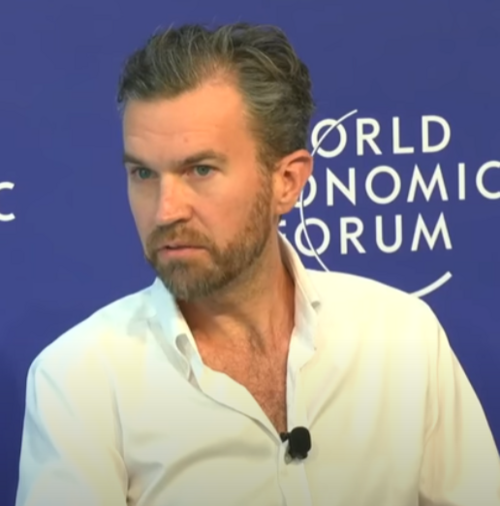
Jeremy O'Brien
Co-founder & Executive Chairman
Quantum optics physicist who co-founded PsiQuantum in 2016 and served as CEO before becoming Executive Chairman.

Pete Shadbolt
Co-founder & Chief Scientific Officer
Co-founder who helped put the first quantum processor on the cloud; leads PsiQuantum's science.

Terry Rudolph
Co-founder & Chief Architect
Theoretical physicist and co-founder driving PsiQuantum's fault-tolerant architecture.
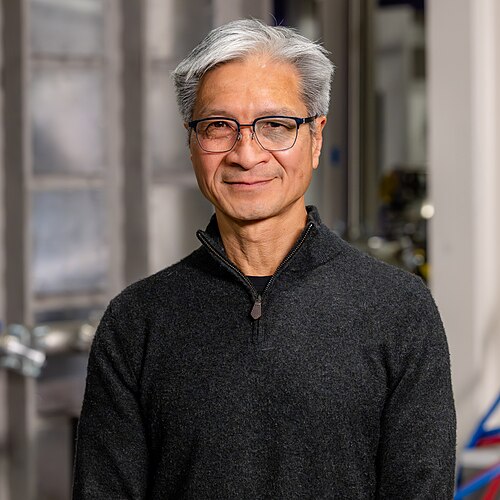
Victor Peng
Interim CEO
Former AMD president and Xilinx CEO; appointed PsiQuantum's interim CEO in 2026.
Key leaders
Recent hires
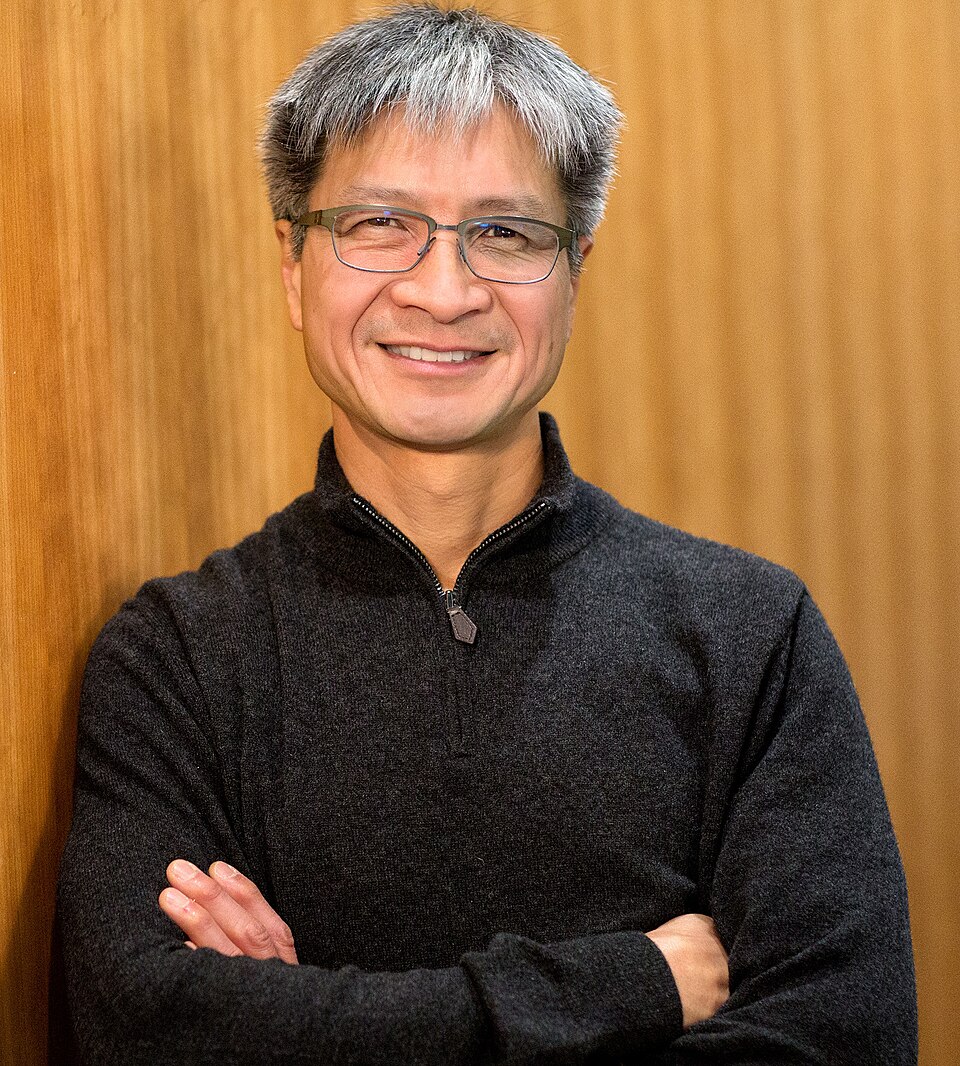
Victor Peng
Interim Chief Executive Officer
Previously at Advanced Micro Devices · Palo Alto, California
Joined Feb 2026
Lip-Bu Tan
Member, Board of Directors
Previously at Intel Corporation
Joined Apr 2026