
Tenstorrent
Top 100
Illustrative curve — no price history on file for this company.
Funding
Raised a $693M round on Dec 2, 2024, bringing the total raised amount to $1B.
Returns Calculator
A $10,000 investment at Series C round (2021) would today be worth:
$26,000
2.6×the original amount
Illustrative · based on reported post-money valuations
Top posts
Patrick Moorhead
@PatrickMoorhead
$CBRS first print as a public company is a revenue beat wrapped around a guide that tells the comprehensive story. Very big YoY revenue numbers reinforcing the need for fast inference. But… 1/ Growth stalled sequentially. Core revenue was $191M, up 12% QoQ in Q1. The Q2 guide is ~$194M, essentially flat. The hypergrowth narrative decelerates the moment you stop reading year-over-year comps. 2/ Margins are headed the wrong way. Core gross margin was 47% in Q1, guided to 36-38% next quarter and 38-41% for the year. Scaling cloud and inference is compressing unit economics, not expanding them. 3/ Profitability is deteriorating, not improving. Core operating margin moves from -2% in Q1 to a guided -30 to -32% in Q2. The “positive adjusted EBITDA” leans on $18M of D&A add-back in a business that has to keep buying data centers to grow. 4/ Concentration did not go away, it rotated. UAE-affiliated customers were ~86% of 2025 revenue. The answer is a $ 20B-plus, 750MW commitment to one customer, OpenAI, who also lent Cerebras $1B and gets paid partly in warrants. Trading G42 risk for OpenAI risk could be looked at as a bigger single point of failure, not diversification, and most of the $24.6B backlog is that one contract. 5/ The moat is contested. “Fastest AI” is no longer uncontested. Tenstorrent and Groq are pushing latency claims, Google’s TPU 8i and AWS Trainium target inference head-on, and even the AWS deal has Trainium running prefill while Cerebras handles decode. That could be viewed as a feature-supplier role inside someone else’s stack, not platform ownership. The wafer-scale technology is real and genuinely differentiated on speed. The margin path, the cash burn, and the concentration are the questions that matter now. Competition is important and I would like to see Cerebras do well.
Stephanie Palazzolo
@steph_palazzolo
The scoops don't stop! Qualcomm has been in talks to acquire AI chip startup Tenstorrent. A price b/w $8-$10b has been floated in convos, which would represent a big premium to the $3.2b Tenstorrent was trying to raise at in November. w/ @validapau https://t.co/IWMXjtZrre
matthew sigel, recovering CFA
@matthew_sigel
QCOM is in talks to acquire Tenstorrent at $8-10B per The Information. Tenstorrent builds RISC-V AI accelerators for data center and edge inference. RISC-V is an open-source chip instruction set: no ARM royalties, fully customizable silicon. Key differentiator is that these chips promise to avoid the costly HBM memory that NVIDIA depends on. Led by Jim Keller (AMD Zen, Tesla FSD chip), Tenstorrent's last confirmed round: $693M Series D, Dec 2024, $2.6B valuation. Was in talks for $800M more at $3.2B pre-money as of Nov 2025. Why does this matter? NVIDIA just paid $20B to acquihire Groq, another low-memory alternative architecture. Then absorbed the IP and the HBM supercycle kept rolling. Pattern worth watching: big players keep buying the memory alternatives, but DRAM requirements aren't coming down yet. QCOM buying Tenstorrent would be their data center AI entry and an ARM dependency hedge simultaneously. Or it becomes the next acquihire that quietly disappears.
Ben Pouladian
@benitoz
Qualcomm is assembling a full stack by checkbook: Ventana (CPU) + Alphawave (SerDes) + Modular (the anti-CUDA compiler, ~$4B), and reportedly circling Tenstorrent (accelerators, $8-10B). If Tenstorrent closes, that's $14B+ to assemble what Nvidia already ships integrated. What it means: nobody beats Nvidia on any single chip. The lock-in was never the GPU, it was the whole stack fused by software. So the challengers are now trying to buy that glue. Why it matters: this is a fight for inference, not training. And the axis is bandwidth and TCO, not raw FLOPs (see AI250's near-memory design). Memory Wars, confirmed. Assembling a stack by M&A is the loudest proof that the integrated stack is the moat.
Wall St Engine
@wallstengine
Qualcomm $QCOM is reportedly in talks to acquire Tenstorrent for $8B-$10B, per The Information. Tenstorrent builds AI chips based on RISC-V and claims better efficiency for certain AI workloads versus general-purpose GPUs. Talks are still ongoing and could fall apart. https://t.co/EAOW9SCCR9
Ahmad
@TheAhmadOsman
Local AI hardware = capacity X bandwidth X software stack - Capacity tells you what fits - Bandwidth tells you how hard the box can breathe - The software stack tells you how much of the spec sheet you can actually cash out. Hardware by Memory Bandwidth - Mac Studio M3 Ultra: up to 512GB @ 819 GB/s - RTX PRO 6000 Blackwell: 96GB @ 1792 GB/s - RTX 5090: 32GB @ 1792 GB/s - RTX 4090: 24GB @ 1008 GB/s - RX 7900 XTX: 24GB @ 960 GB/s - Radeon PRO W7900: 48GB @ 864 GB/s - AMD Radeon AI PRO R9700: 32GB @ 640 GB/s - Intel Arc Pro B65: 32GB @ ~608 GB/s - Tenstorrent Wormhole n300: 24GB @ 576 GB/s - Tenstorrent Blackhole p150: 32GB @ 512 GB/s + 800G - MacBook Pro M5 Max: 460-614 GB/s - MacBook Pro M5 Pro: 307 GB/s - DGX Spark: 128GB @ 273 GB/s (coherent + CUDA) - Mac mini M4 Pro: 273 GB/s - Ryzen AI Max / Strix Halo: ~256 GB/s (~96GB usable GPU) - MacBook Air M5: 153 GB/s - Snapdragon X2 Elite: 152-228 GB/s - Intel Lunar Lake: 136 GB/s - Snapdragon X Elite: 135 GB/s - Mac mini M4: 120 GB/s - Arc Pro B60: 24GB @ ~456 GB/s Verdict - GPUs are still the bandwidth kings - Apple wins: stupid amounts of memory, don't want to shard across GPUs - Apple loses: when raw tokens/sec & concurrency matter more - DGX Spark: coherent memory + NVIDIA stack - Strix Halo / Ryzen AI Max: first real x86 unified-memory contender - Tenstorrent: fully OSS stack, excited to see this mature Fitting != serving Even if it fits, you still pay for - bandwidth during decode - KV cache growth - dequantization - batching + concurrency - scheduler quality - framework overhead The only mental model that matters: 1. What must fit? 2. What bandwidth tier do I need? 3. What software stack can actually deliver it? In short: - NVIDIA -> fastest raw speed - Apple Studio M3 Ultra -> biggest one-box memory - Strix Halo -> first real x86 unified - DGX Spark -> coherent NVIDIA dev appliance - AMD / Intel Arc -> rising alternatives - Tenstorrent -> fully opensource stack Do ask: "which bottleneck am I buying?" Not: "which hardware is best?"
Hiring Signal
Based on public job postings · updated monthly
Latest news
Public companies tied to Tenstorrent
About Tenstorrent
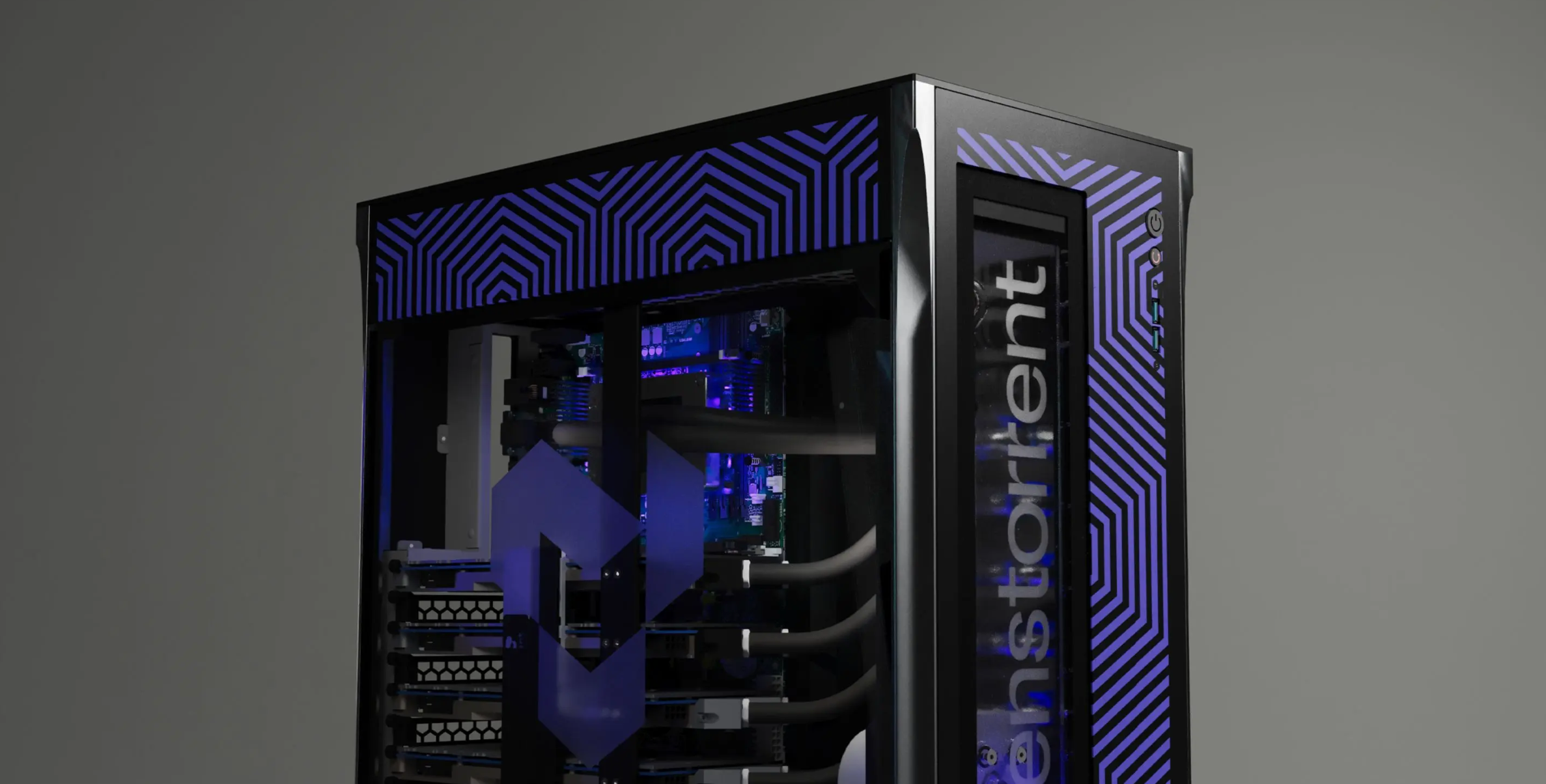
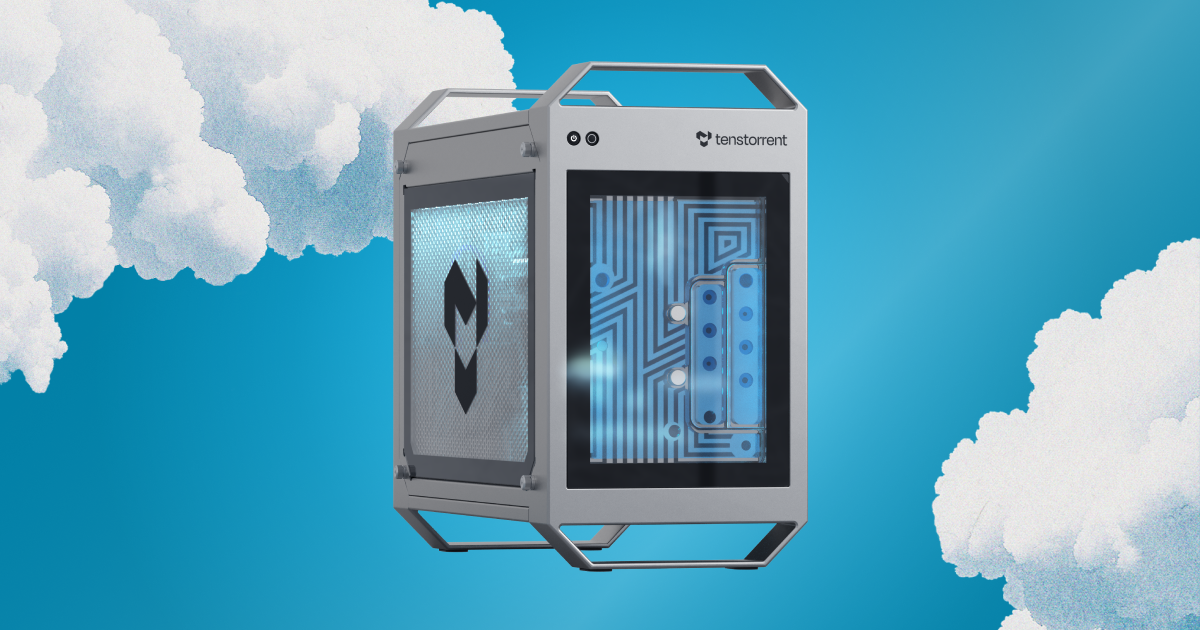
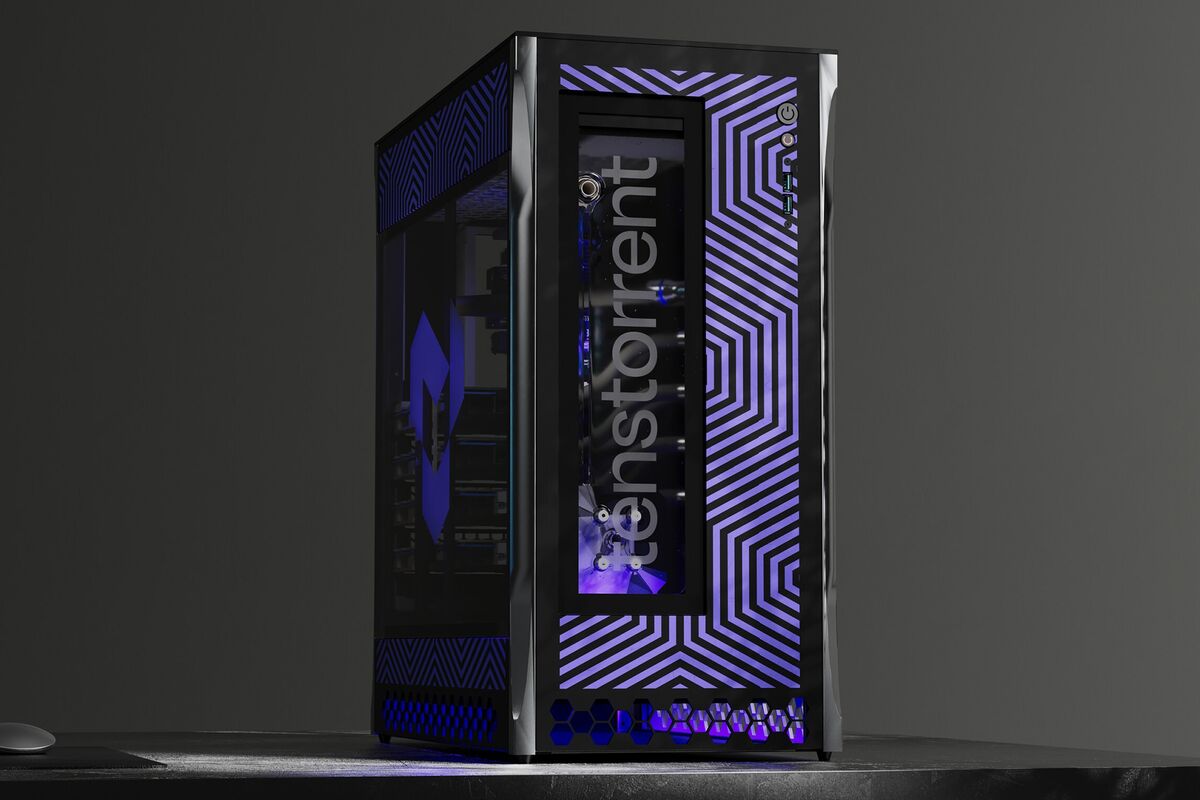
Tenstorrent is an AI and RISC-V computing company that designs high-performance AI processors, chiplets and open-source software as an alternative to GPU-based AI hardware. It is led by veteran chip architect Jim Keller.
Tenstorrent on video
 2:39:15
Jim Keller: The Future of Computing, AI, Life | Lex #162
Lex Fridman · Interview
 1:34:44
Jim Keller: Moore's Law, Microprocessors | Lex #70
Lex Fridman · Interview
 42:48
42:4861DAC Keynote: Jim Keller, CEO, Tenstorrent
DACtv · Keynote
 6:00
6:00Tenstorrent's Keller: We're in an AI Hype Cycle
Bloomberg Tech · Interview
Founders

Jim Keller
CEO
Legendary chip architect behind AMD Zen, Apple A-series and Tesla FSD; now CEO of Tenstorrent.
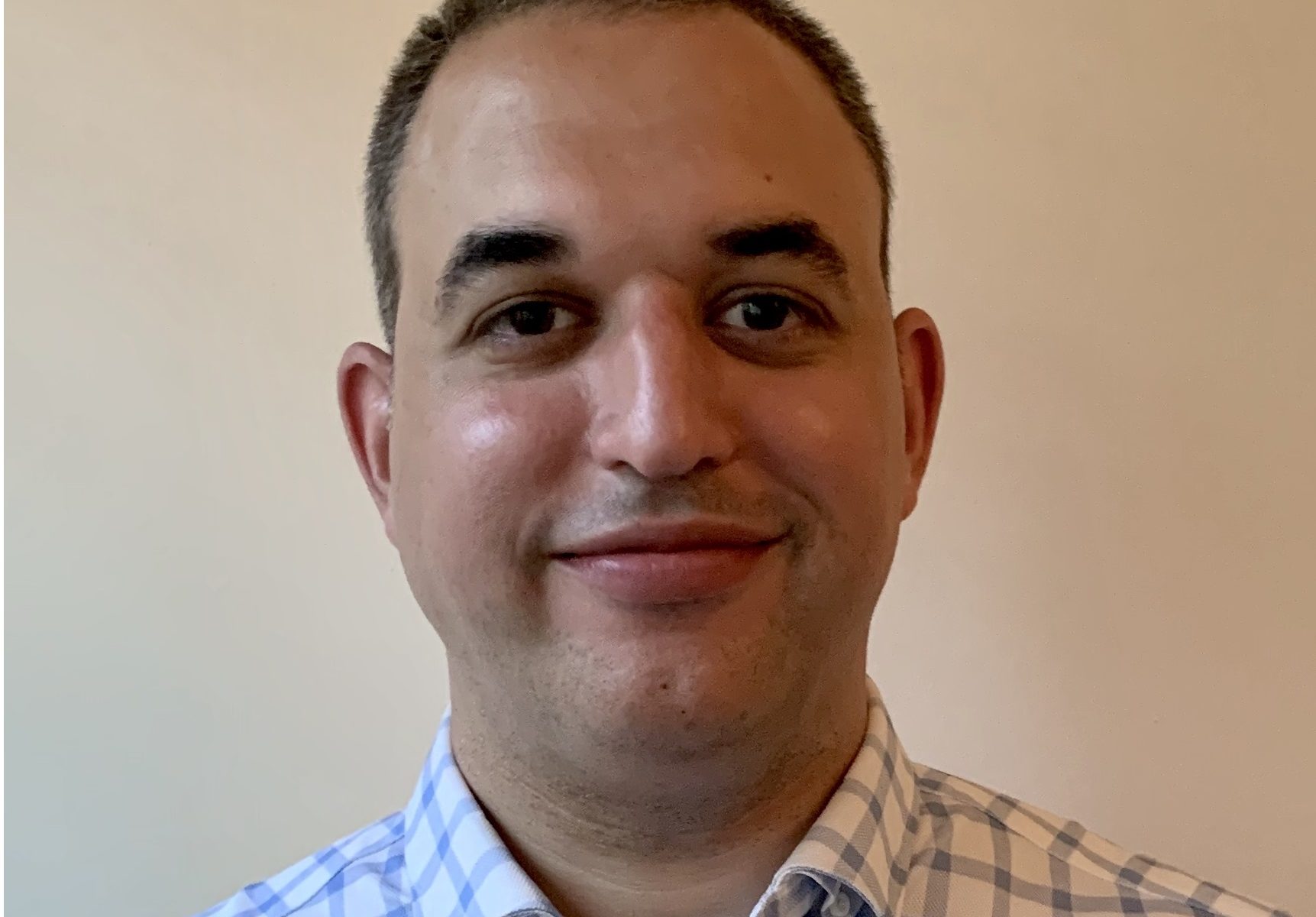
Ljubisa Bajic
Co-founder, President & CTO
Founded Tenstorrent in 2016 and served as its original CEO.
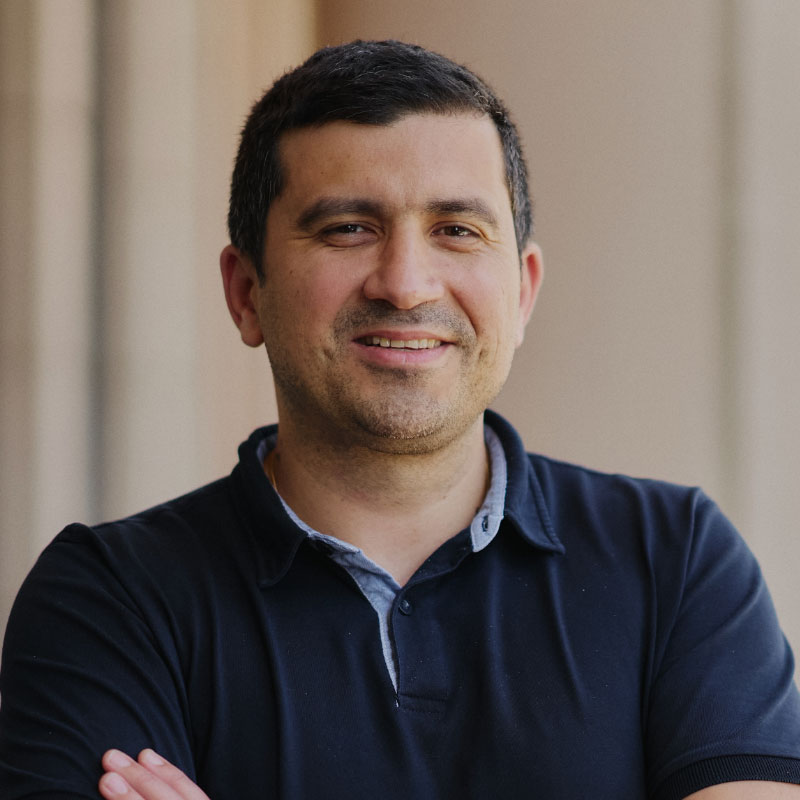
Milos Trajkovic
Co-founder
Co-founded Tenstorrent and helped design its AI processor architecture.
Key leaders
Recent hires

Michaela Tarpey
Principal HR Business Partner
Previously at Mercury · Charlotte, North Carolina, United States
Joined Jun 2026

Elena Fedotova
Staff Technical Writer
Previously at Intel Corporation · Munich, Bavaria, Germany
Joined May 2026

Voya V.
Sr. Director
Previously at National Bank Financial · Greater Toronto Area, Canada
Joined May 2026

Adrian Montero
Sr. Principal Engineer | Architecture
Previously at Qualcomm · Austin, Texas, United States
Joined May 2026
David Salisbury
Director IP Sales & Business Development, Europe
Previously at Hailo · Langenbach, Bavaria, Germany
Joined Jun 2026
Dimitris Tsaliagkos
Principal Engineer
Previously at Codasip · Greece
Joined May 2026