
Applied Intuition
Top 100
Illustrative curve — no price history on file for this company.
Funding
Raised a $600M round on Jun 17, 2025, bringing the total raised amount to $1B.
Returns Calculator
A $10,000 investment at Series D round (2021) would today be worth:
$41,667
4.2×the original amount
Illustrative · based on reported post-money valuations
Top posts
Molly O’Shea
@MollySOShea
Qasar Younis (@qasar), CEO of $15B @AppliedInt, says the AI industry may be due for a pullback.. "We're at that phase of the bubble where all the opulence in the companies is what people talk about rather than the products." "I think there's gonna be a little bit of a pullback. Maybe that's not a hot take, but I think it's coming." We cover: 00:00 GMI Commencement Speech 00:48 AI Anxiety for New Grads 02:23 Work Hard on What Matters 03:24 RAISE Summit AI Trends 05:03 Applied Intuition Updates 08:26 Physical AI Long Game 09:12 Hottest Take Right Now 11:57 Books & Founder Lessons 14:45 What He’s Looking Forward To
Lenny Rachitsky
@lennysan
My biggest takeaways from @qasar: 1. The real AI revolution over the next 5 to 10 years will happen in the physical world, not in software. While everyone obsesses over ChatGPT, Claude and coding agents, the real impact will come from autonomous vehicles, mining robots, and farming equipment. They’ll save lives (over 30,000 die annually in U.S. car accidents), enable mobility for disabled people, solve labor shortages in dangerous industries where nobody wants to work, and much more. 2. AI isn’t replacing jobs in industries like trucking and farming—it’s arriving just in time to fill a labor gap that already exists. The average age of a farmer in the U.S. is in the late 50s. Long-haul trucking jobs go unfilled not because people can’t do them but because the tradeoff isn’t worth it anymore; a family can choose DoorDash or Uber so the parent can pick up their kid. Qasar’s view is that physical AI will fill gaps created by demographic shifts and changing preferences, not displace workers who want those roles. He’s careful to say this doesn’t mean there are no downsides, but that the framing of “AI is coming for your job” misses the more immediate reality. 3. Comparing Chinese AI companies to American AI companies is a category error. Qasar uses Huawei as his example: the company’s name means “China’s ambition,” roughly a quarter of its employees are Communist Party members, and its goal is not to grow profits but to extend the state. So when people say Chinese EVs are outcompeting Detroit, they’re comparing a government-backed entity with no profit constraint to companies like Rivian that get hammered by public investors for losing money. Qasar says that if American companies were freed from profit expectations the same way, they’d field comparable products. The point isn’t that China is incompetent or not a serious competitor; it’s that the comparison framework most people use is wrong. 4. The Industrial Revolution is the best mental model for AI. Just like the late 1800s brought child labor and monopolies but also unprecedented access to healthcare, heating, cooling, and material goods, AI will have downsides we must address while delivering massive benefits. The key: don’t pump the brakes on technology to protect jobs—that hurts the people you’re trying to help most. Find solutions that account for workers while enabling progress. 5. Building under the radar can be your competitive advantage. Qasar built Applied Intuition for nearly a decade without a social media presence. One of the company’s early core values was “Our best work is done alone and quietly.” His reasoning: every minute spent on a podcast, a post, or content for public consumption is a minute not spent on customers and the product. Qasar adds an important caveat—he could afford to stay quiet because he was already known in the ecosystem. Founders without an existing network may need the visibility that public presence creates. 6. Qasar thinks most Silicon Valley CEOs lack taste—both in the artistic sense and in the sense of making good operational decisions—because their life experience is too narrow. A founder who grew up in Cupertino, went to Berkeley, and immediately started a company has never experienced what it’s like to be at the bottom of a 100,000-person organization. Qasar spent over a decade at GM and Bosch and says that experience—the bureaucracy, the bad tools, the disconnected leadership—directly informs how he leads Applied Intuition today. His broader point is that taste comes from exposure to a wide range of human experience: backpacking, reading old books, working in different cultures and industries. 7. Successful companies almost always show traction early. If you’re two years in and the market isn’t giving you increasingly specific signals about what to build, consider resetting. The foundation might be wrong—co-founders, market, or life phase. Your first startup is practice; treat it as building the muscle of being a founder, not as your magnum opus. 8. Emotions are a filter that distorts decision-making, and the goal should be to remove that filter so the “raw image” of the decision comes through. Qasar doesn’t mean leaders shouldn’t have empathy; he means that attachment to your own idea, the desire to be right, and the tribal instinct to follow the loudest voice are all emotional distortions. His practical heuristic: the same decision, presented to multiple people independently in the company, should produce the same result. If it doesn’t, some emotional filter is warping the signal. This connects to his broader philosophy of creating a culture where the best idea wins regardless of who proposed it or how senior they are. 9. Qasar’s advice on company values: don’t invent them philosophically. Instead, write down the 5 to 10 things that explain why your company is already successful, and those become your values. Applied Intuition’s values include “Move fast, move safe,” “Never disappoint the customer,” “Technical mastery,” “High output matters,” “Laugh a lot,” and “Half of the work is follow-up.” 10. Treat your first startup as a zero—a practice round, not destiny. Qasar tells founders leaving Applied Intuition to start companies that their first three years will likely produce nothing, and that’s fine. Founding is a craft, like woodworking. If your first table is wobbly, you don’t quit—you build another one. He thinks a lot of founders, especially first-timers, put so much pressure on themselves to succeed immediately that they miss the real value of the experience: learning and building the muscle. His own third company is the most successful by far, and he sees this pattern repeatedly. There are entire funds focused exclusively on multi-time founders for exactly this reason.
Bilal Zuberi // Red Glass Ventures
@bznotes
Applied Intuition is one of the most interesting companies in Physical AI space. Enabling many industries and sector globally where things 'move'. Now introducing Dana - their Agentic AI solution for the physical world. @AppliedInt | @qasar
Katie Kirsch
@katiekirsch
.@AppliedInt just launched Dana - a new way to build physical AI - and they're hiring! Today on the @a16z Build newsletter, we're sharing the story behind the now $15B valued company that's aiming to put "intelligence on a billion machines" across trucking, construction, mining, and defense.... and how it all started with @qasar & peter ludwig, who both grew up outside Detroit with a passion for cars & automotive engineering from a young age. We also highlight 5 roles the team is most focused on hiring right now: - Engineering Manager - Behavior - Engineering Manager - Axion - Senior Firmware Engineer - Senior Software Engineer - ML Infrastructure - Technical Program Manager - Core Autonomy Link in thread:
sourcery
@sourceryy
"We're at that phase of the bubble where all the opulence in companies is what people talk about rather than the products." @AppliedInt CEO @Qasar Younis thinks AI will see "a little bit of a pullback." "And a lot of times when people talk about this concept of boom and bust, the view is the bust always takes longer than you think." "But I think the cycles move a lot faster."
Kenan Saleh
@kenanhsaleh
It was great having @qasar speak to the last a16z @speedrun batch about his learnings from building multiple successful startups - and most recently Applied Intuition into a $15B company Next batch starts tomorrow https://t.co/nWyWLMB9Lw
Hiring Signal
Based on public job postings · updated monthly
Latest news
Public companies tied to Applied Intuition
About Applied Intuition
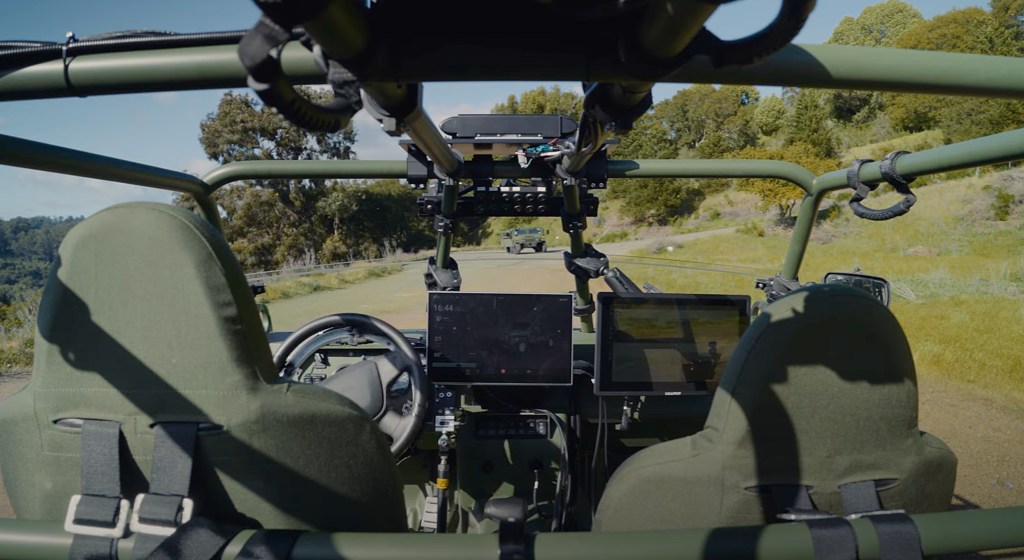
Applied Intuition is a Sunnyvale-based company that builds simulation, development tooling, and AI software used to develop, test, validate, and deploy autonomous vehicles and other intelligent machines. Its customers include 18 of the top 20 global automakers and the U.S. Department of Defense, and it has expanded aggressively into defense autonomy. Founded in 2017 by Qasar Younis and Peter Ludwig.
Applied Intuition on video
 51:18
51:18Building a Multi-Billion Dollar Hard Tech Company | Qasar Younis
Uncapped with Jack Altman · Interview
 1:24:24
The real AI revolution isn't software | Qasar Younis
Lenny's Podcast · Interview
 1:20:22
Why Physical AI Is the Next Frontier | The a16z Show
a16z · Talk
 23:15
23:15Qasar Younis & Karl Heiselman on design at Applied Intuition
Applied Intuition · Feature
Founders
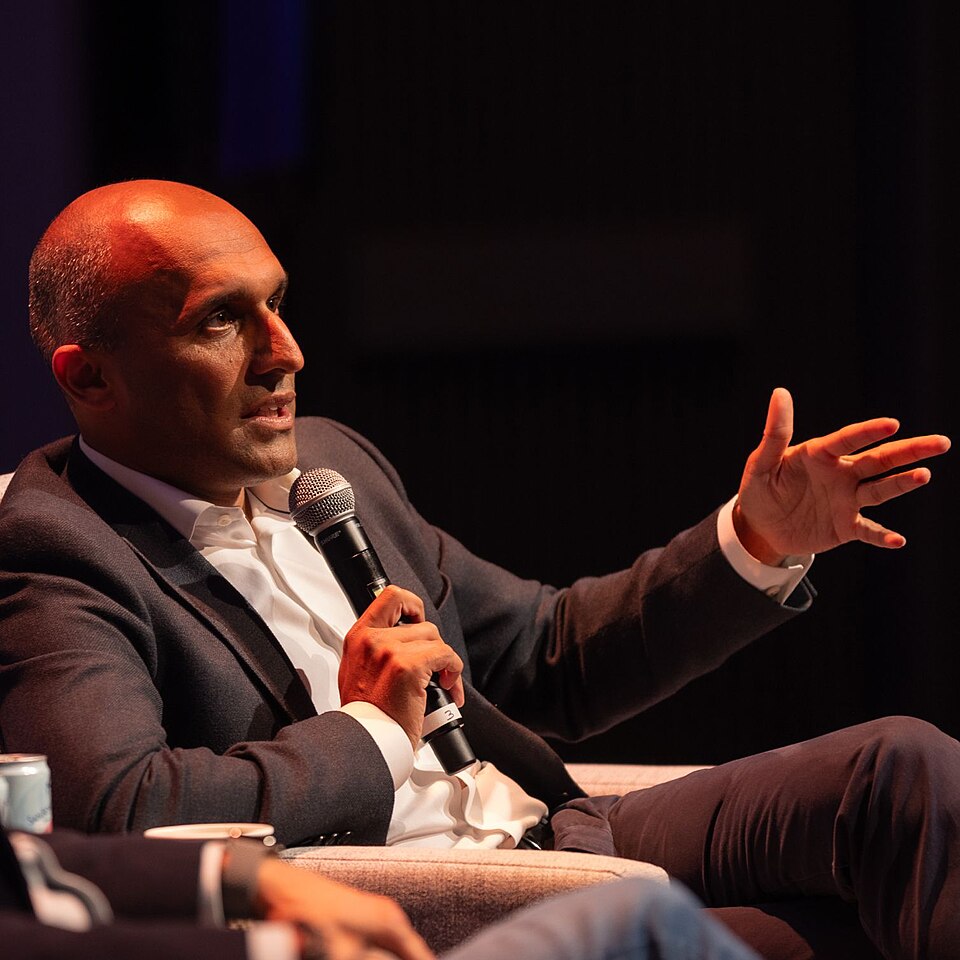
Qasar Younis
Co-founder & CEO
Pakistani-American entrepreneur who was COO of Y Combinator and a Google product manager (via the Talkbin acquisition) and began his career as a General Motors engineer. Co-founded Applied Intuition in 2017.
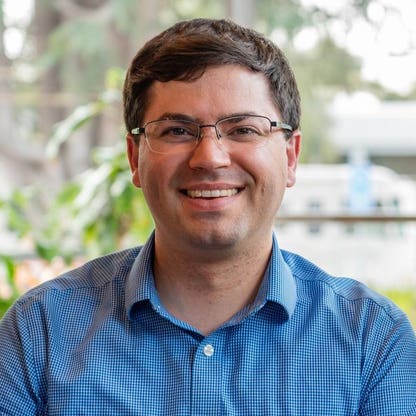
Peter Ludwig
Co-founder & CTO
Former Google engineer who worked on Google Maps and Android Automotive before co-founding Applied Intuition; leads the company's engineering and product.
Key leaders
Recent hires
Malhar Patel
Deputy CTO
Sunnyvale, California, USA
Joined May 2026
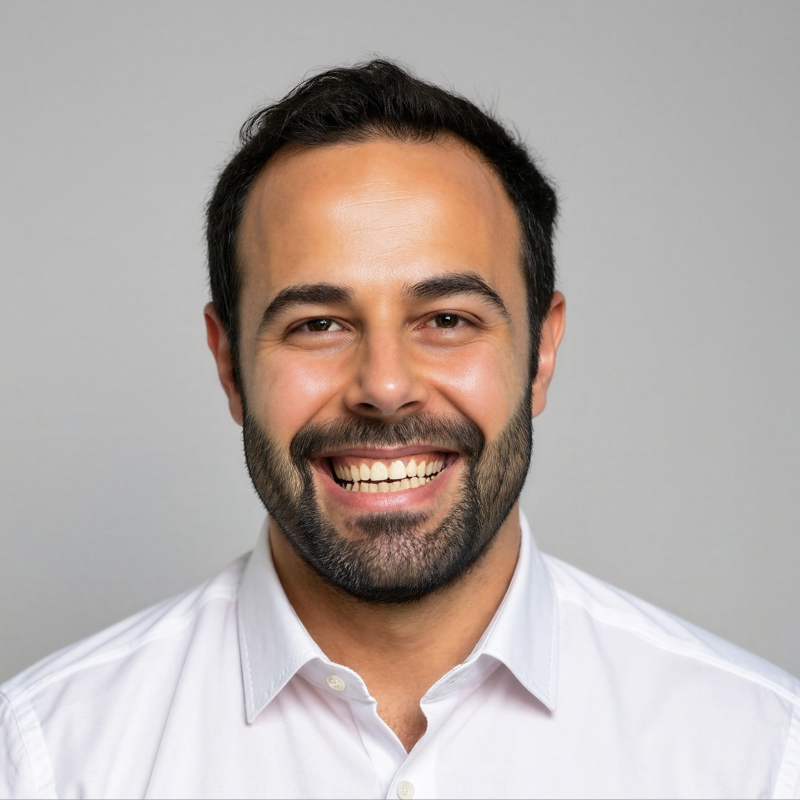
Soulaiman Itani
CEO of Middle East
Previously at Accenture · Mountain View, California, United States
Joined Jun 2026
Satya S.
Head of Information Technology
Previously at Samsara · San Francisco, California, United States
Joined Jun 2026

Amarylla Ganner
Workplace Manager- Front End
Previously at H2O.ai · Redwood City, California, United States
Joined May 2026

Sunny Lee
Technical Business Development
Previously at Venture Lab · Ann Arbor, Michigan, United States
Joined Jul 2026
Branden Witt
System Safety Engineer
Previously at Naval Air Systems Command V-22 Osprey Joint Program Office · Niceville, Florida, United States
Joined Jun 2026