
Nuro
Top 100
Funding
Raised a $203M round on Aug 21, 2025, bringing the total raised amount to $2B.
Returns Calculator
A $10,000 investment at Series B round (2019) would today be worth:
$22,222
2.2×the original amount
Illustrative · based on reported post-money valuations
Top posts
Aakash Gupta
@aakashgupta
Uber buying a parking app looks like a feature add. It’s actually an autonomous fleet infrastructure play. Uber just announced 20,000 Lucid-Nuro robotaxis deploying in 2026, committed to 5,000 Stellantis L4 vehicles with NVIDIA, invested $100 million in AV charging hubs, and launched an entire Autonomous Solutions division. All within the last few months. Every one of those vehicles needs somewhere to sit between rides. Somewhere to charge, get cleaned, get maintained, and stage for the next pickup. SpotHero has 13,000 garages across 400 cities. That’s pre-negotiated relationships with physical lot operators in every major metro Uber plans to deploy robotaxis. The 15-year-old parking app just became an AV depot network. Think about the operational math. A robotaxi needs to run 18+ hours a day to hit the per-mile economics that make the fleet profitable (industry estimates put the breakeven somewhere between $0.73 and $1.37 per mile). The other 6 hours require a physical location for charging, cleaning, and queuing. Building that from scratch in 400 cities costs billions and takes years. Acquiring a company that already has those operator relationships and digital booking infrastructure? That compresses the timeline dramatically. The Uber One membership angle confirms the long game. They’re bundling parking into the subscription that already covers rides and delivery, which means every Uber One member who drives becomes a new data point for where to pre-position autonomous vehicles. The parking demand map IS the AV staging map. Lyft had a SpotHero integration in 2022 and killed it in 2023. The gap between “we’ll partner on a feature” and “we’ll acquire the company” tells you everything about where Uber’s strategic ambition sits versus Lyft’s. One company is building an autonomous fleet operating system across partnerships with Waymo, Nuro, Momenta, https://t.co/cvPS3UUJSd, and WeRide. The other has a $5 billion market cap. SpotHero was last valued at $290 million. Uber’s market cap is $146 billion. This barely registers on the balance sheet, but it solves one of the hardest operational problems in autonomous fleet deployment: where do 25,000+ robotaxis go when they’re not carrying passengers?p
Max Weinbach
@mweinbach
I'm in the Nvidia Q&A with Jensen and someone just asked the difference between Alpamayo and Tesla FSD Jensen said: “As to your second question: Tesla’s FSD stack is completely world-class. They’ve been working on it for quite some time. It’s world-class not only in the number of miles it’s accumulated, but in the way it’s designed—the way they do training, data collection, curation, synthetic data generation, and all of their simulation technologies. Of course, the latest generation is end-to-end Full Self-Driving—meaning it’s one large model trained end to end. And so… Elon’s AD system is, in every way, 100% state-of-the-art. I’m really quite impressed by the technology. I have it, and I drive it in our house, and it works incredibly well. Alpamayo was designed around a different idea. The first difference is that NVIDIA doesn’t build self-driving cars—we build the full stack and the technology for everybody else to build self-driving cars. And we build—like we do for humanoid robotics—three computers: the training computer, the simulation computer, and the robotics computer, which is the self-driving car computer. We have software stacks across all of that. Our customers can use all of it, some of it, or parts of it—whatever makes sense for them. And so we’re working with the entire industry—Tesla for their training system, Waymo for the car computer, and XPeng. Nuro—who I think just announced they’re going into the robotaxi business—with Lucid and Uber; and NVIDIA is part of that. So our system is really quite pervasive because we’re a technology platform provider—that’s the primary difference. There’s no question in our mind that, of the billion cars on the road today, in another 10 years’ time, hundreds of millions of them will have great autonomous capability. This is likely one of the largest, fastest-growing technology industries over the next decade. And the last thing we do is: we open-source everything. If a customer would like to use the model that we train, they’re welcome to do that. If they would like to use our model technology but train it themselves, we even help them do that. We’re not a self-driving car company—we just want to enable the world’s autonomous industry. Everything that moves should be autonomous.”
dara khosrowshahi
@dkhos
An exciting milestone with @Nuro and @LucidMotors: Uber employees are now taking test rides on the @Uber app in the Bay Area. Proud of our terrific partners as we make strong progress on our our path to launch.
Sawyer Merritt
@SawyerMerritt
NEWS: Nvidia today announced it is partnering with Uber to help build the "world’s largest Level 4 autonomous fleet, targeting 100,000 Robotaxis starting in 2027." "Nvidia will work with Uber to scale the world’s largest level 4-ready mobility network, using the company’s next-generation robotaxi and autonomous delivery fleets, the new Nvidia Drive AGX Hyperion 10 autonomous vehicle development platform and Nvidia Drive software purpose-built for L4 autonomy. These vehicles will be developed in collaboration with Nvidia and other Uber ecosystem partners, using Nvidia Drive. Nvidia and Uber are also working together to develop a data factory accelerated by the Nvidia Cosmos world foundation model development platform to curate and process data needed for autonomous vehicle development. NVIDIA Drive AGX Hyperion 10 is a reference production computer and sensor set architecture that makes any vehicle L4-ready. It enables automakers to build cars, trucks and vans equipped with validated hardware and sensors that can host any compatible autonomous-driving software, providing a unified foundation for safe, scalable and AI-defined mobility." • Uber will bring together human riders and robot drivers in a worldwide ride-hailing network powered by DRIVE AGX Hyperion-ready vehicles. • Stellantis, Lucid and Mercedes-Benz are collaborating on level 4-ready autonomous vehicles compatible with DRIVE AGX Hyperion 10 for passenger mobility, while Aurora, Volvo Autonomous Solutions and Waabi extend level 4 autonomy to long-haul freight. • Uber will begin scaling its global autonomous fleet starting in 2027, targeting 100,000 vehicles and supported by a joint AI data factory built on the NVIDIA Cosmos platform. • NVIDIA and Uber continue to support a growing level 4 ecosystem that includes Avride, May Mobility, Momenta, Nuro, https://t.co/7Cn0X1AQtF, Wayve and WeRide. • NVIDIA launches the Halos Certified Program, the industry’s first system to evaluate and certify physical AI safety for autonomous vehicles and robotics.
Gary Black
@garyblack00
Good article from DowJones summarizing $TSLA, Waymo, $UBER efforts to scale unsupervised autonomy. Tesla and Waymo duel in the robotaxi race - but the company spending the most builds no cars at all By Jurica Dujmovic 06/27/2026 14:20pm $Uber is quietly writing $500 million checks to lock in robotaxis as Waymo threatens to leave it behind Tesla's autonomous robotaxis use the company's Model Y vehicles. The promised Cybercab is still in development. Tesla investors are paying a premium for a robotaxi fleet of just 20 cars If you own Tesla stock, much of what you are paying for above the value of a carmaker is a bet on autonomy and artificial intelligence that has barely reached the income statement: full self-driving software, the Optimus robot and a robotaxi network. The robotaxi is the nearest-term and most testable piece of that bet, and this spring it amounted to about 20 driverless Tesla Model Y vehicles in Austin, Dallas and Houston. Value the car business the way investors price any other automaker, and it accounts for only a fraction of the stock; the rest is the market's bid on that future, a premium no ordinary carmaker could carry. What is new is that the bet is finally testable against operating data rather than projections. This is not only a Tesla (TSLA) story. Autonomous driving has been separating investors from their money for years - from the self-driving Google cars promised to the public by 2017 to the roughly $10 billion that General Motors (GM) poured into Cruise before shutting it down. What is different this time is that the money has moved from research budgets to balance sheets, with contracts, milestones and deployment targets attached, across Tesla, Uber Technologies (UBER) and Alphabet (GOOGL) alike. Each company's progress, or lack of it, is now something investors can finally mark to market. Tesla's bet is real, but still small Tesla's robotaxi bet is a vertical one, with a single company owning the vehicle, the software and the network. The hardware is no longer theoretical: CEO Elon Musk said Cybercab production had begun at Giga Texas in April, though he warned that output would follow a "stretched out S-curve" - his term for a manufacturing ramp that stays slow far longer than usual before turning sharply higher, with little volume expected until late in the year. Musk has cautioned that material Cybercab revenue is unlikely before 2027. Tesla's shareholder update in late 2025 listed Phoenix, Las Vegas and three Florida cities - Miami, Orlando and Tampa - as part of its planned first-half 2026 Robotaxi coverage. But with that window nearing its end, those five markets have still not moved into service. In its 1Q update, Tesla no longer attached the first-half timing to those cities and instead described them as "Preparations Underway," while spring reporting pointed to a rollout that was slipping rather than accelerating. The spread between Waymo's half-million weekly rides and Tesla's roughly 20 active unsupervised robotaxi vehicles is, in effect, what the market is being asked to absorb every time it assigns Tesla a robotaxi premium. Uber in the fast lane If Tesla is the bet on owning everything, Uber is the bet on owning almost nothing and renting demand to whoever builds the cars. If Tesla is the bet on owning everything, Uber is the bet on owning almost nothing and renting demand to whoever builds the cars. That model is getting more expensive to defend. On June 3, Reuters reported that Uber has committed close to $500 million to self-driving software startup Nuro, far more than previously disclosed. The publicly known piece was Uber's participation in a $203 million funding round that valued Nuro at $6 billion. On top of that, Uber quietly made a second, larger investment and agreed to release further capital as Nuro cleared defined technical and commercial benchmarks. e listed names it is the most direct bet on robotaxi-sensor demand. $TSLA $UBER $GOOGL
Sam Badawi
@Sam_Badawi
$UBER has committed nearly $500M to autonomous driving startup Nuro as it ramps up its robotaxi ambitions, according to Reuters. The investment is part of Uber’s broader self-driving strategy, which includes partnerships with Nuro and $LCID to deploy autonomous vehicles at scale.
Hiring Signal
Based on public job postings · updated monthly
Latest news

Public companies tied to Nuro
About Nuro
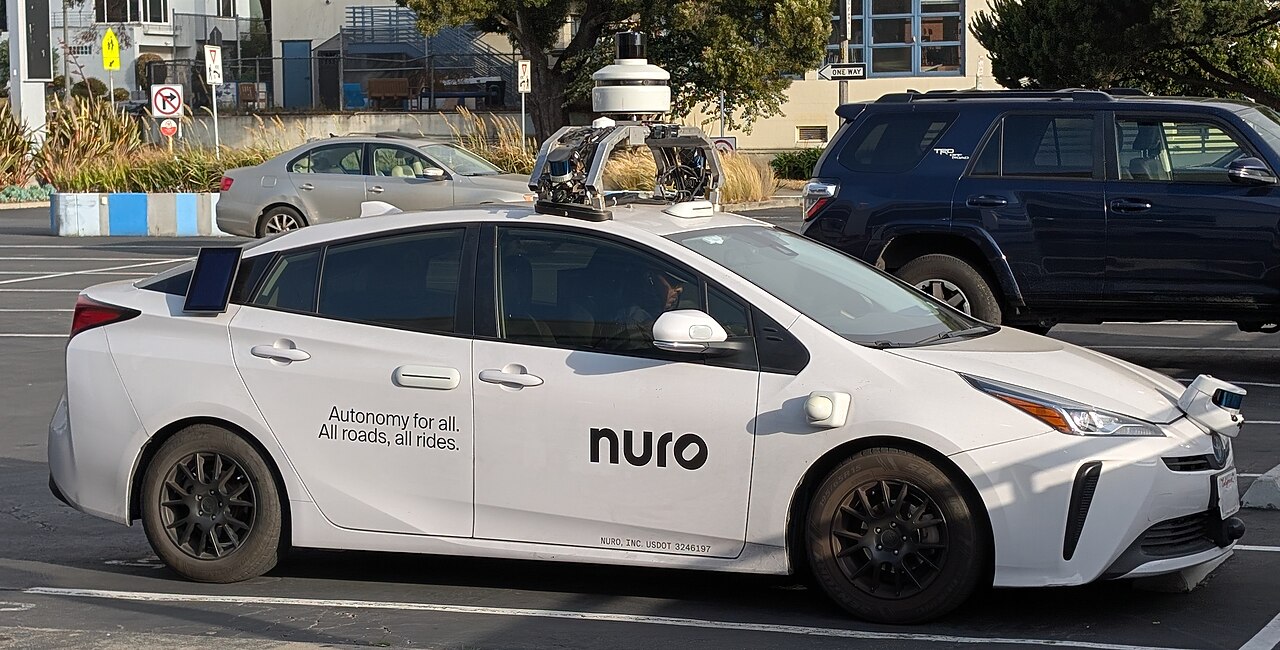
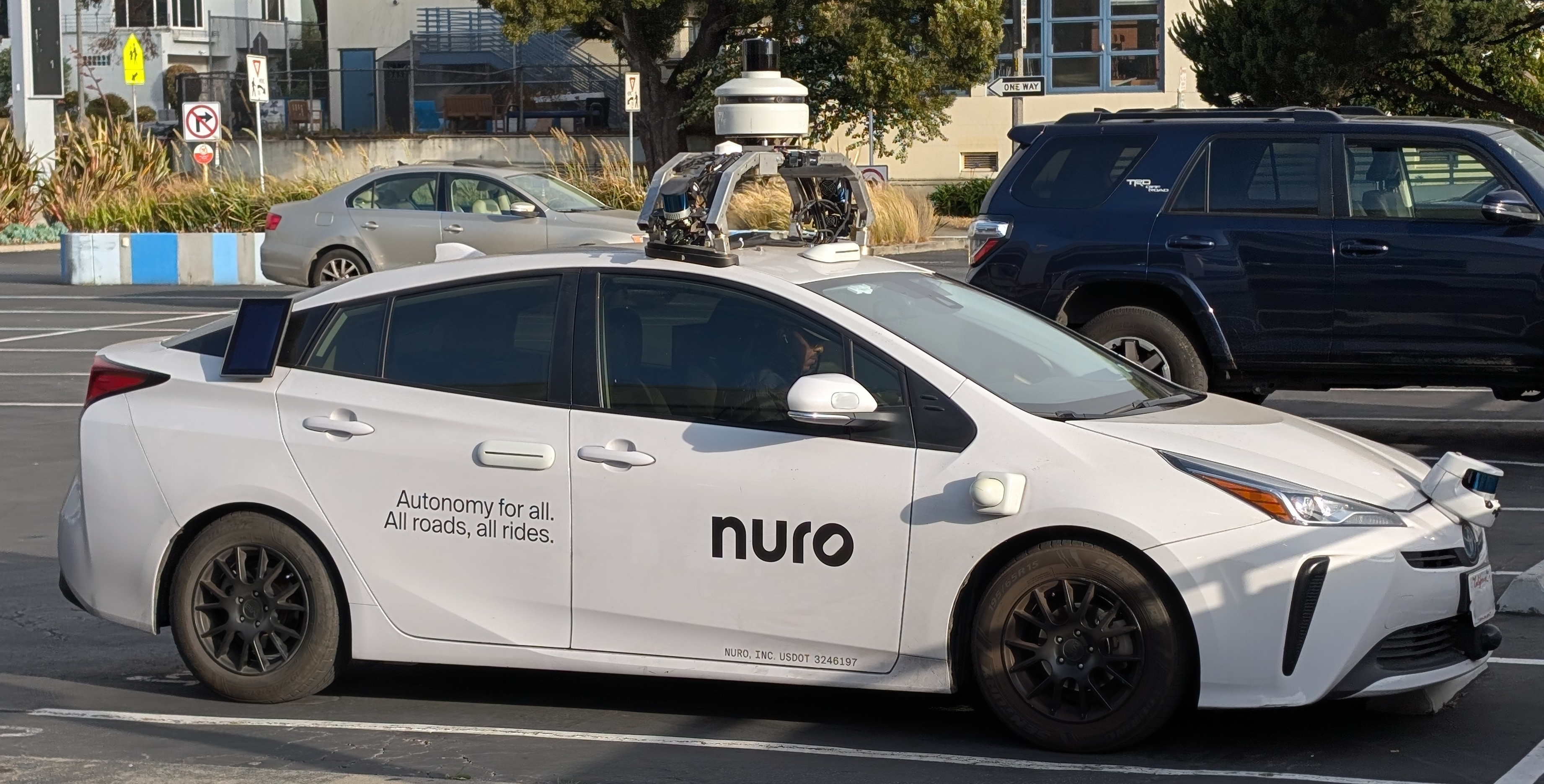
Nuro is an AI-first autonomous driving company that develops the Nuro Driver, a Level 4 self-driving system it now licenses to automakers and mobility partners for robotaxis and delivery.
Nuro on video
 1:14:45
Dave Ferguson: Co-Founder & President @ Nuro | E2173
This Week in Startups · Interview
 49:27
49:27Dave Ferguson: From Waymo to Nuro & Self-Driving Cars
All Things Negotiation · Interview
 18:48
18:48Dave Ferguson on Self-driving cars
X, The Moonshot Factory · Talk
 43:32
43:32Autonomous Delivery with Jiajun Zhu of Nuro
Scale AI · Talk